Spacecraft cemeteries are not quite like their terrestrial counterparts; the dead aren’t buried there but instead they are deorbited into them…
This Halloween, we want to bring your attention to the afterlife of spacecraft, and the extreme lengths engineers go to so they don’t become drifting ‘zombies’. Your neighbours may be competing for the spookiest house on the street, but one point on Earth wins the prize for spookiest of all. This is a place from which you definitely wouldn’t be able to hear a cry for help…or a satellite coming crashing down…
Point Nemo, centred at the heart of the South Pacific Ocean Uninhabited Area (SPOUA), is famously known to be the exact spot in the ocean farthest from any landmass in every direction. This oceanic pole of inaccessibility was identified before it was even named, to become the crashpoint for the world’s first space station, Salyut 1, in 1971. Since then, Point Nemo has buried more than 250 satellites, or what remains of them after suffering a harsh, fiery free-fall through the atmosphere. In a few years, it will become the resting place for the ISS…
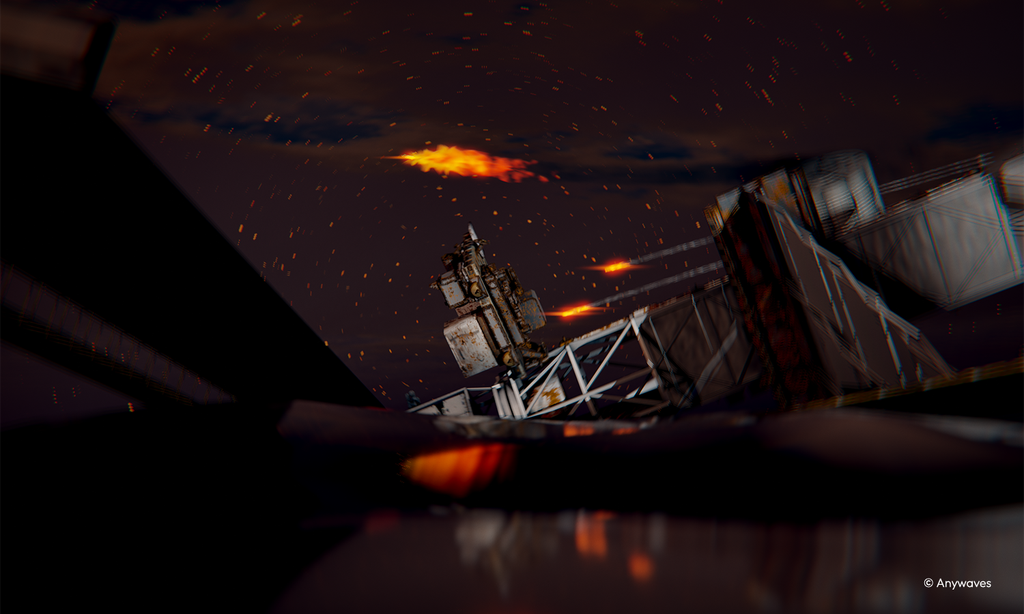
The Final Command: Planning the End
The Frankensteins of the real world, satellite engineers, are constantly inventing new design concepts to build better, more efficient and technologically advanced spacecraft. New materials, technology and instruments are always being integrated into satellites ranging from as big as thousands of kilograms to as small as under 1 kg, so small you could hold it in your hand.
The design requirements, guidelines to make sure you don’t end up with Frankenstein’s monster, are determined by the mission. What is the purpose of the mission and what orbit does it need to be in to fulfil its purpose? The main aspects of a satellite’s design life that are carefully engineered are its fuel, mechanical limits, component protection, subsystem performance, lifespan endurance and last but not least, its End-of-Life or EoL plan.
The boom in small satellites has led to a preference for low Earth orbits, with the headcount in this type of orbit expected to multiply threefold by the end of the decade. To prevent dead satellites from cluttering these orbits, strict end-of-life regulations dictate that large spacecraft must be brought down (unlike their higher-orbiting counterparts which are banished outward into graveyard orbits). In their dying days, they must have a spark of life to push them out of their orbits and steer themselves towards their graves…
A Fiery Fall from Space
As satellites hurtle towards Earth, they hit a dense wall that is the atmosphere and their speed creates immense friction. Falling at more than 24,000 km per hour, the atmospheric drag upon them causes them to burn up in a giant, fiery ball of temperatures higher than 1600℃.
First, the outer and most fragile parts are immediately ripped away and incinerated: massive solar panel arrays, golden thermal blankets and external antennas. These are made of materials such as aluminium, glass and lightweight plastics, which vaporise instantly upon exposure to the atmospheric inferno.
Second, the core. Around 80 to 60 km above Earth, spacecraft reach maximum dynamic pressure and forces begin crushing the weight, tearing its main body wide open. The organs: the bus, internal electronics, onboard computers (OBCs) and long lengths of wiring completely melt away. Although copper wiring, printed circuit boards (PCBs) and internal plastics stand strong in the harsh vacuum of space, they don’t stand a chance during atmospheric re-entry.
Lastly, the indestructible skeletons stay fighting until the end. The heaviest and most heat-resistant components have been engineered to survive the most extreme and hellish conditions of space and launch. These bones include massive propellant tanks, rocket engine nozzles and heavy structural joints. Materials such as titanium alloys, stainless steel and carbon-carbon composites are the last to melt in such extreme temperatures and can sometimes just plunge through the fire with little harm (if you consider third-degree burns little).
These final remains need a safe place to land, far from any human activity. This brings them to the most isolated place on Earth…
Point Nemo: The Ocean Graveyard
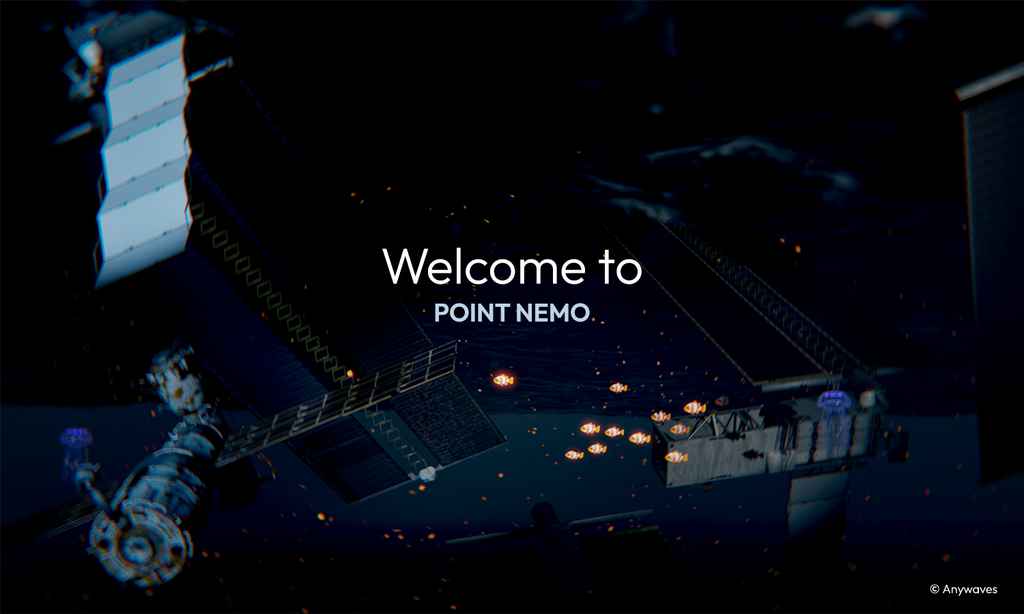
The surviving debris eventually splashes down around Point Nemo, finding its final resting place in the pitch-black, freezing waters of the South Pacific Ocean Uninhabited Area. Located 2,688 km from the nearest dry land, this vast region is roughly 34 times the size of France.
It is the ultimate phantom fleet. In an eerie twist of fate, this location is so isolated that the closest living humans are rarely found on Earth but are usually the astronauts aboard the International Space Station, floating 415 km directly overhead.
Deep down in the silence rests a spacecraft cemetery of over 250 vessels that have been swallowed by the Pacific, never to be seen again. Satellites from Russia, Japan, USA and Europe have deorbited here and among these sunken giants is the famous Soviet Mir space station, which plunged into the icy depths in 2001. However, a new main character will soon be joining these ghosts, preparing to outshine all other relics in the deep…
2031: The ISS Joins the Ghosts
In 2031, the International Space Station itself will reach the end of its design life.
However, bringing down a 420,000 kg space station isn’t as simple as flipping a switch. The death sequence will be a highly orchestrated event unfolding over several years:
- 2028 – The Slow Descent: The station will begin to give in to atmospheric drag. Instead of fighting it, engineers will let Earth’s atmosphere slowly reel the monster in, draining its altitude to save fuel for the final blow.
- 18 Months Out – Enter the Gravedigger: A heavily modified SpaceX Deorbit Vehicle, with 46 thrusters and massive propellant tanks, will dock with the station. Its sole mission is to act as the undertaker.
- 6 Months Out – Abandoning Ship: As the station’s altitude drops to a critical 330 km, the final crew will evacuate. Newer commercial sections will detach to survive on their own in orbit, leaving the old core completely deserted.
- 2031 – The Fatal Burn: The undertaker vehicle will fire its engines in a massive retrograde burn against the station’s 27,000 km/h orbital speed. This seals its fate, plunging the giant into the atmospheric crematorium and aiming its surviving debris precisely at Point Nemo.
When the ISS finally splashes down, the area surrounding Point Nemo will truly become a goldmine for future space archaeologists. This silent cemetery serves as a submerged museum of human ambition. Down in the freezing dark, these heavy alloy skeletons will rest undisturbed, outliving generations of the humans who originally built them.
Happy Halloween everyone!

