VILSA Software Defined Radio
Technical specifications
Designed for performance without compromising flexibility
In-flight reconfigurability
The Zynq® UltraScale+ SoC at the heart of the VILSA platform enables reliable in-flight reconfiguration. Update your firmware, application software or even the parameters of the RF transceiver after launch — without any physical intervention.
Multi-channel synchronous RF frontend
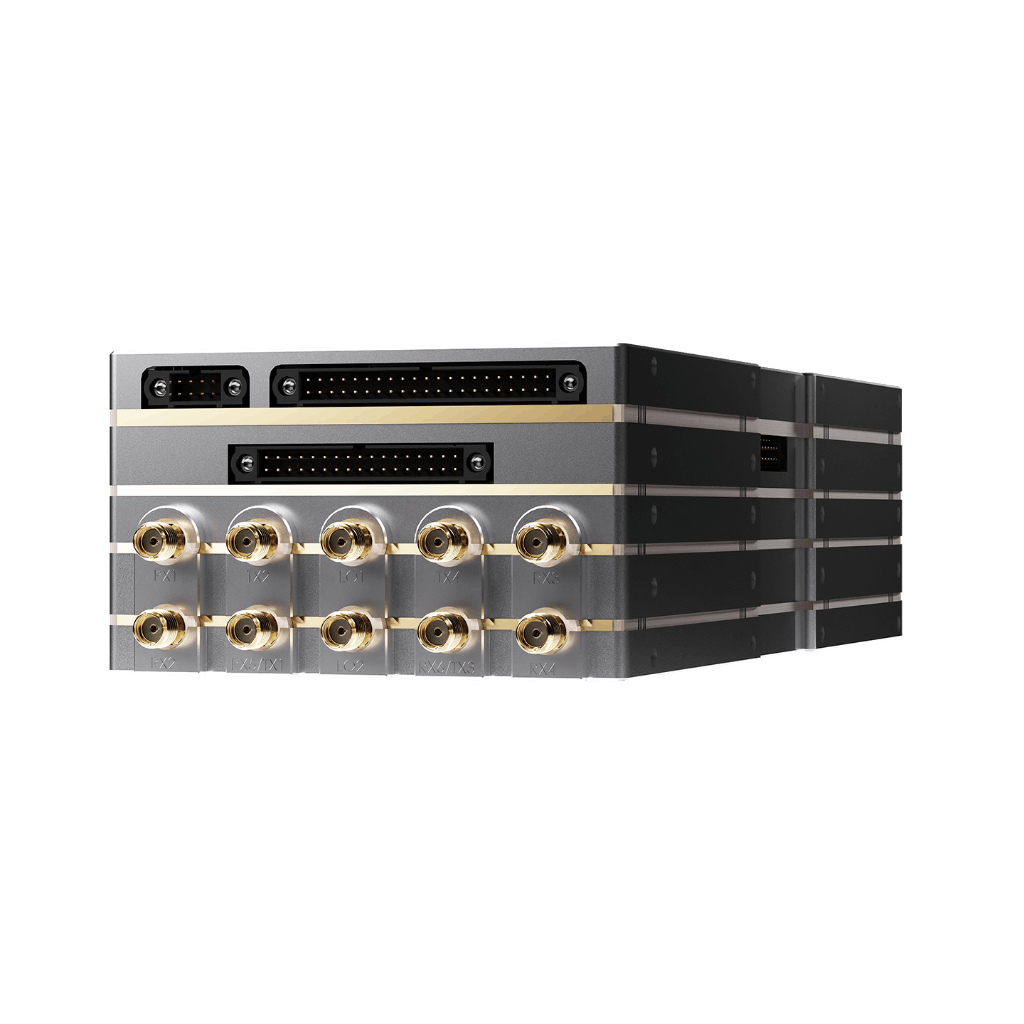
Up to six receive and four transmit channels, all driven by a fully synchronous clock tree. Each channel operates independently while maintaining coherent phase relationships — critical for multi-antenna and radar applications.
Distributed board architecture
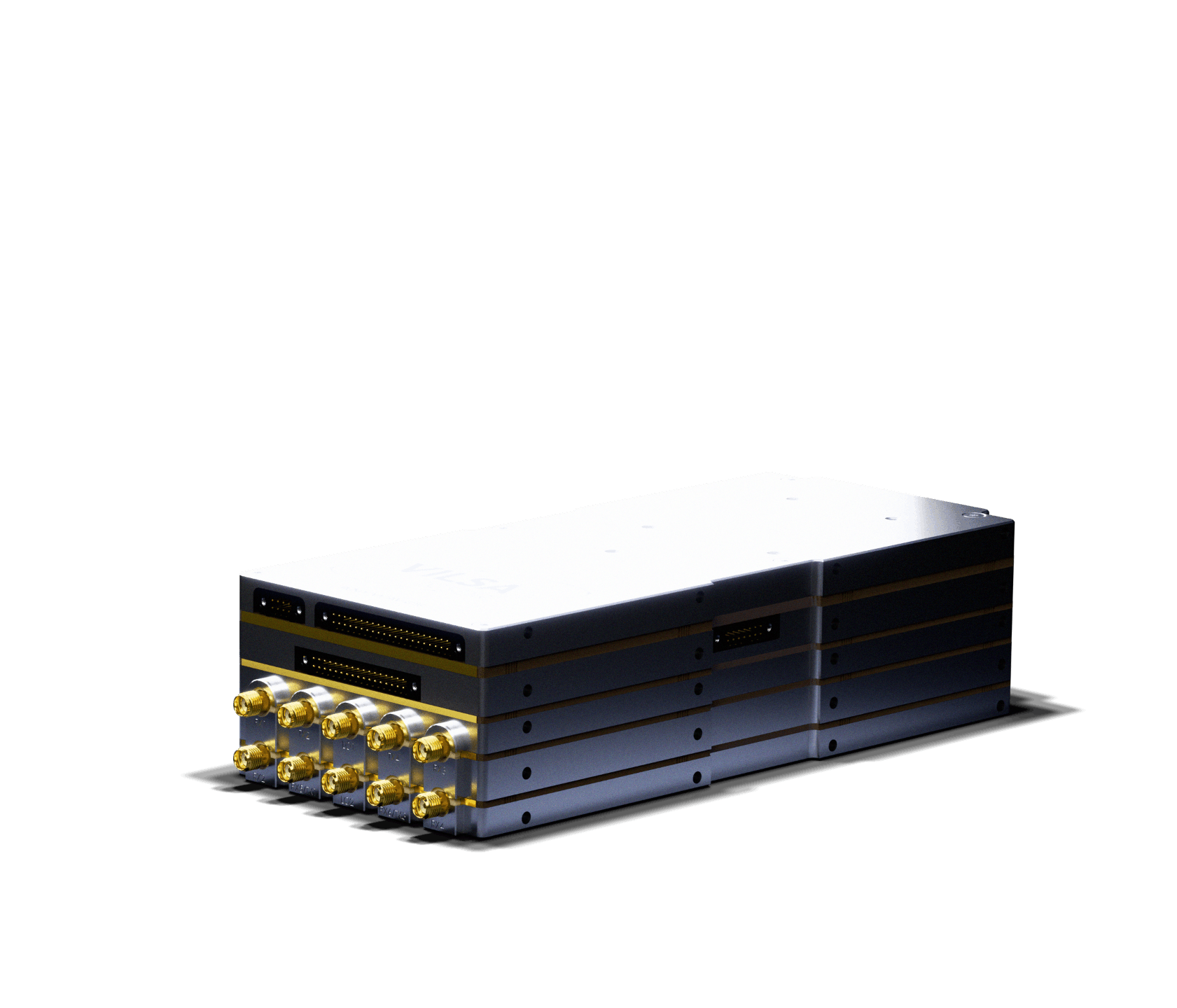
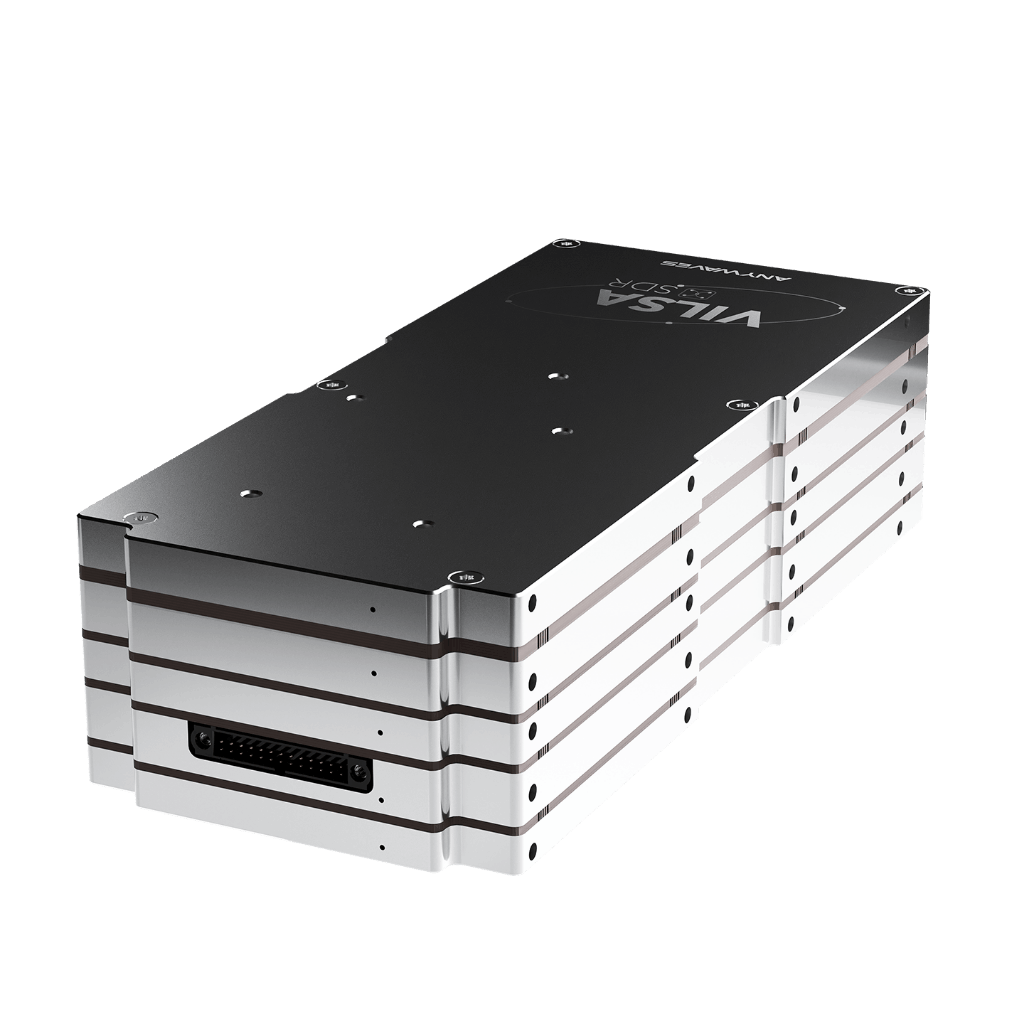
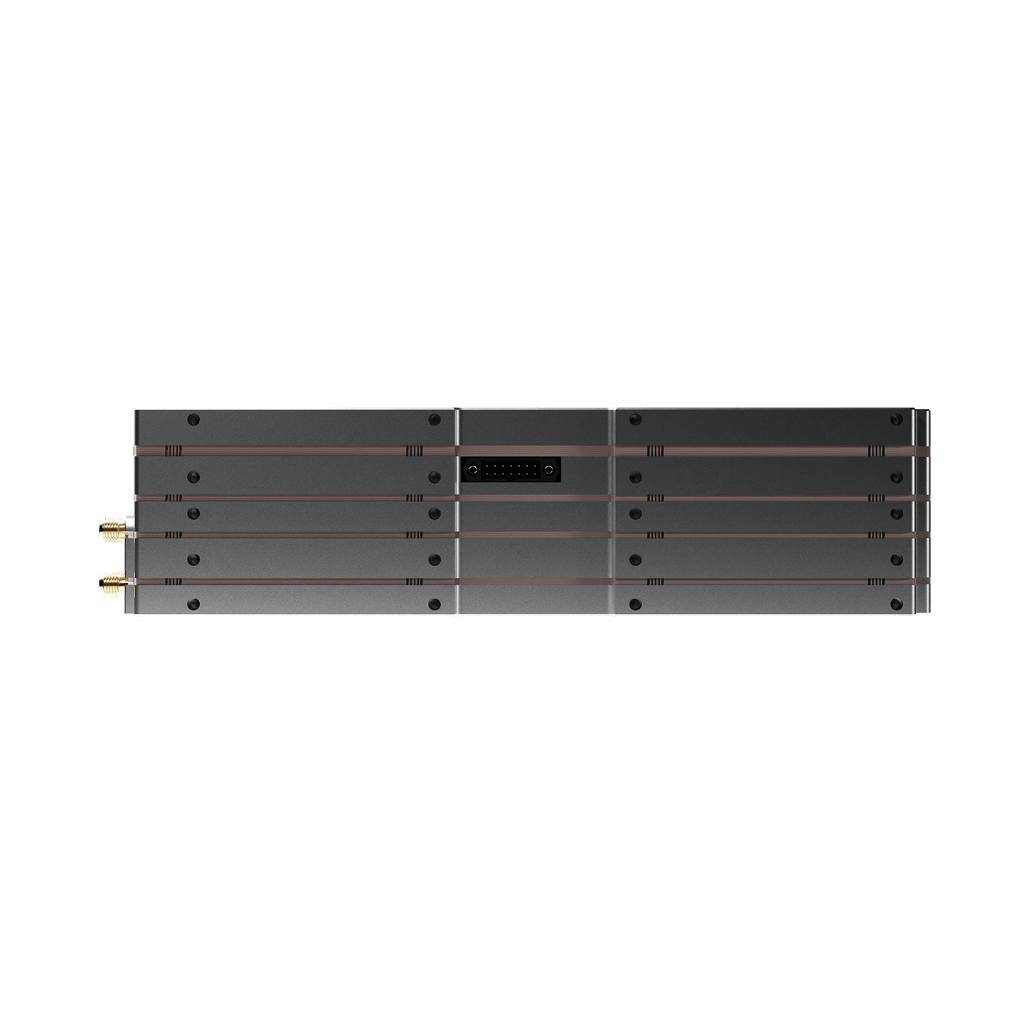
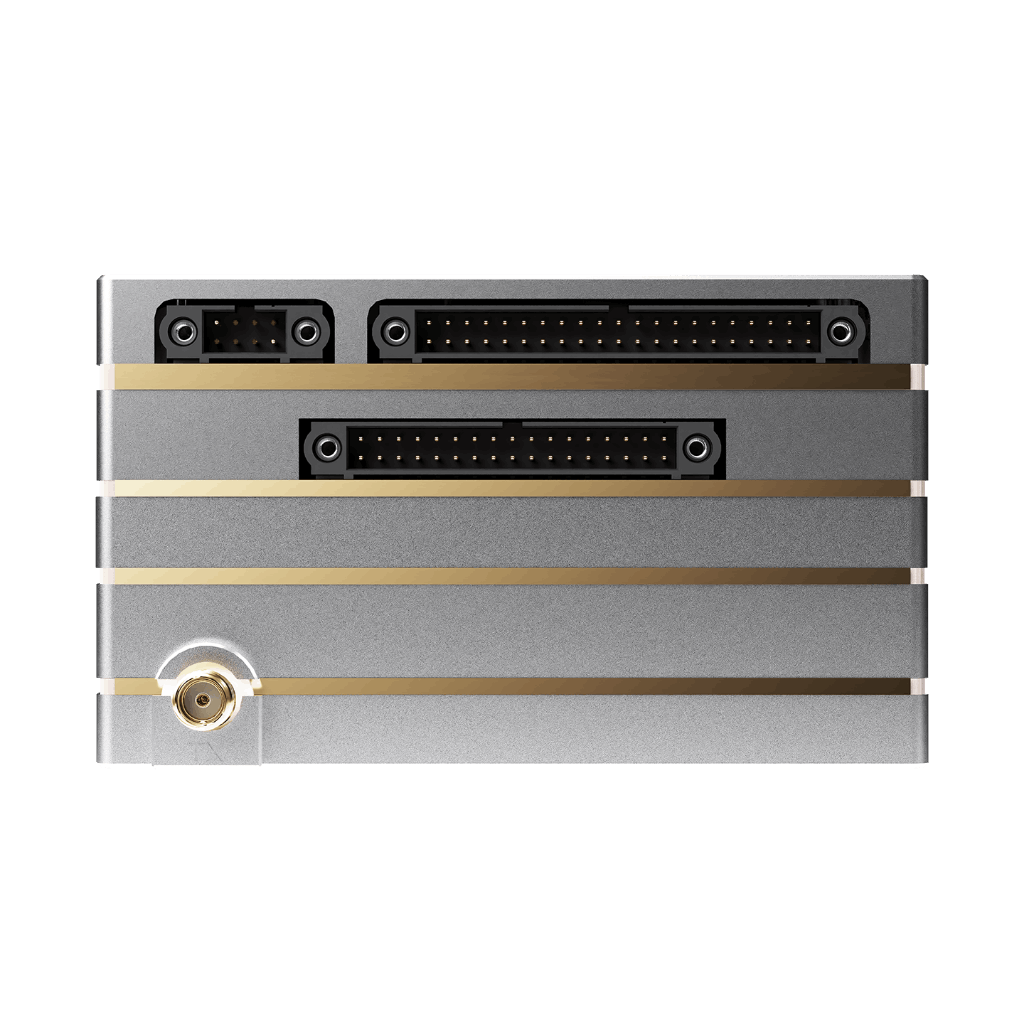
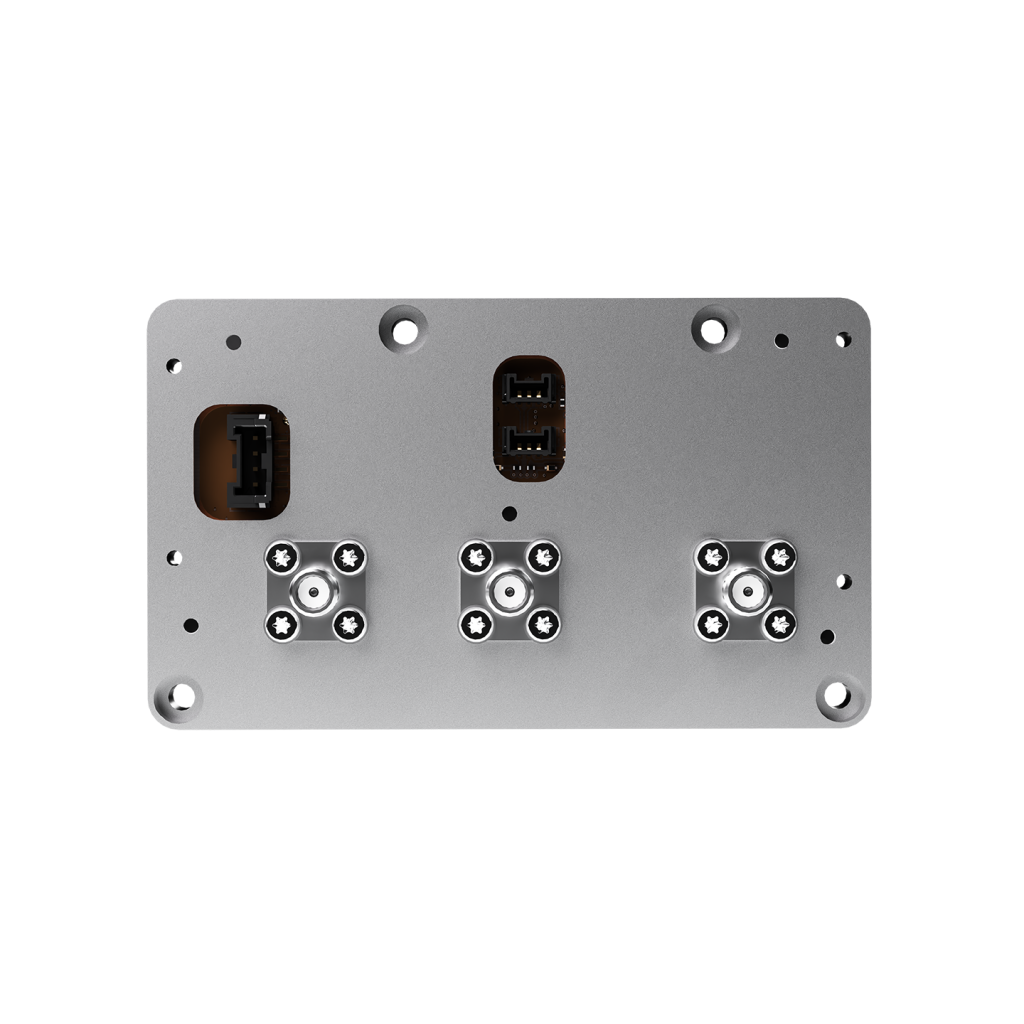
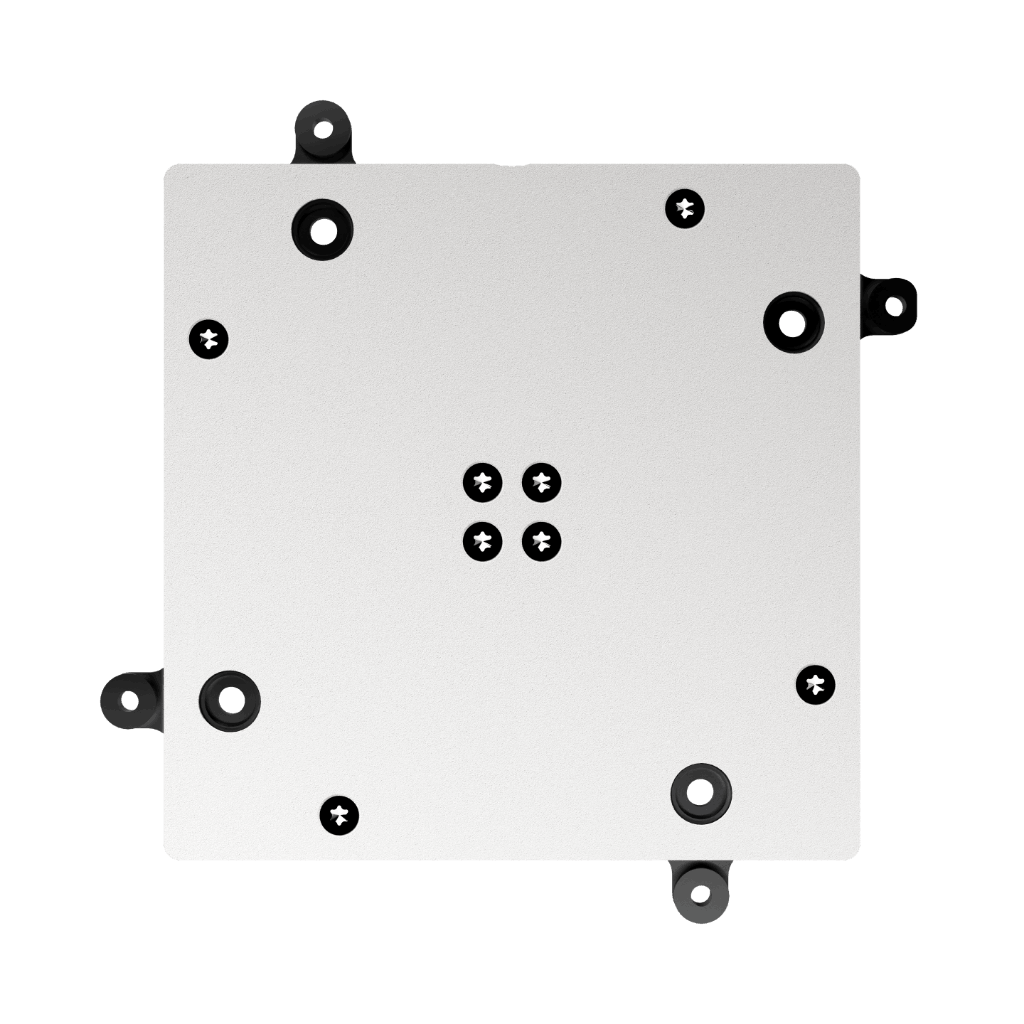
The VILSA platform is built around four modular boards that can be configured to your exact mission requirements. Adjust the number of RF channels, interfaces and mechanics without redesigning the full unit. The VILSA SDR is built around a stacked four-boards architecture separating digital processing and RF transceiver functions. This design enables long-term technology evolution and maintainability without requiring a complete system redesign while preserving a stable, flight-proven system for your mission.
Our flagship Software Defined Radio
The VILSA SDR is a versatile, fully reconfigurable Software Defined Radio for the space industry. Purpose-engineered for extreme space conditions, it combines a high-performance digital core with a fully synchronous multi-channel RF frontend — all within a fully shielded and ruggedized enclosure designed for a 5-year mission lifetime.
Its programmable design gives mission engineers the freedom to tailor the system precisely to the mission requirements: operating frequency and other RF-chain parameters on one side; data and control interfaces and digital signal-processing functions on the other side. The result is a cost-effective, high-reliability SDR that adapts to your mission — not the other way around.

Engineering Model available
Engineering Models are available to configure your mission in your design facility, allowing you to design and validate your system integration with the other payload systems well ahead of flight.

In-Depth Engineering Support
Throughout the project lifecycle, you benefit from in-depth and tailored support from our experienced engineers. They support you in the system definition, integration and verification, ensuring that the VILSA SDR meets your mission requirements.

RF Front-End Development
A portfolio of proven RF front-end building blocks is available which can be adapted and integrated with the VILSA SDR. Possible solutions include S-band integrated SSPA (up to 36 dBm) and X-band transmitters with SSPA (up to 40 dBm), tailored to your mission needs.

SDK (Software Development Kit) and getting started
The VILSA SDR ships with an SDK to accelerate first use and integration. It includes reference application software, FPGA firmware, and example RF sample flows from the RF connectors through to digital signal processing in the SoC. Our team supports you in configuring the SDR to your mission requirements.

Ready to define your next mission?
Tell us about your requirements. Our engineers will help you configure the VILSA SDR to match your platform and mission profile.
Questions & Answers
-
What does ‘software defined’ mean in practice for a space mission?
A Software Defined Radio replaces traditionally hardwired RF signal processing with software running on a programmable core. In practice, this means the same hardware can handle different waveforms, frequency bands or protocols depending on the software loaded — including after launch. For mission engineers, this translates into reduced hardware complexity, faster iteration cycles, and the ability to adapt communications to evolving mission requirements without redesigning the unit.
-
Can the VILSA SDR be reconfigured once in orbit?
Yes. In-flight reconfiguration is one of the core capabilities of the VILSA platform. The Zynq® UltraScale+ SoC allows you to update application software, FPGA firmware and some parts of the RF chains remotely after launch. Triple redundant configuration memories and a Golden recovery memory ensure the system can recover safely from any reconfiguration anomaly.
-
Which frequency bands does the VILSA SDR support?
The VILSA SDR covers 50 MHz to 7 GHz in direct sampling mode, and up to 10 GHz using an integrated superheterodyne receiver. This makes it compatible with VHF, UHF, L-band, S-band, C-band and up to X-band — addressing a wide range of TT&C, payload data downlink, and radar applications within a single unit. Further external up- or down frequency conversion (in Tx/Rx) allow to extend even more this frequency range.
-
What is the maximum instantaneous bandwidth the VILSA SDR support?
The conservative bandwidth per channel is 100MHz if all channels are active. However, the RF chains are wideband and sampling frequency of the DAC and ADC are high (3GSa/s and 12 GSa/s respectively). Therefore the instantaneous bandwidth of one channel could be higher depending on the number of active channels configuration to limit the datalink between the DAC/ADC and SoC.
-
How many RF channels can the VILSA SDR support simultaneously?
The VILSA SDR supports up to six receive and four transmit channels simultaneously, all synchronised by a fully coherent clock tree. Two RF channels have internal switches and so they can be configured as either Rx or Tx. Therefore the SDR, can be configured as either 6Rx/2Tx or either 4Rx/4Tx depending on your mission needs. Both Rx and Tx channels can operate simultaneously (full duplex).
-
What RF front-ends are compatible with the VILSA SDR?
The platform’s flexible architecture is designed to interface with virtually any type of RF front-end.
In-house, proven RF building blocks are available and can be adapted and integrated with the VILSA SDR. Furthermore, our teams can discuss additional custom RF front-ends tailored to your mission needs. -
What is the VILSA SDR’s flight heritage?
The VILSA SDR is based on a previous‑generation Software Defined Radio that has accumulated in‑flight heritage. One public example is the ESA Hera mission to the Didymos asteroid system, where this earlier SDR serves as the core of the Juventas radar payload, designed to map the asteroid’s internal structure. The VILSA SDR builds on this heritage by reusing proven architectural principles, RF and digital building blocks, and validated design know‑how, while extending performance, flexibility and integration capabilities as a next‑generation platform.
VILSA SDR: a reconfigurable Software Defined Radio for space missions
The VILSA SDR is a next-generation Software Defined Radio developed by Anywaves for small satellite and space mission applications. Built around the Zynq® UltraScale+ SoC and a fully synchronous multi-channel RF frontend, the VILSA platform delivers up to 6 receive and 4 transmit channels across a frequency range from 50 MHz to 10 GHz — covering VHF, UHF, L-band, S-band, C-band and X-band within a single, programmable and flight‑qualified unit.
Designed for harsh space environments and qualified for over five years of operation in LEO, the VILSA SDR combines radiation tolerance (18 krad TID), in-flight reconfigurability and massive onboard memory (>256 GB NAND flash) in a compact, ruggedized enclosure. Its software-defined digital and RF architecture allows mission engineers to define the RF chains parameters, adapt the signal processing and reconfigure the system after launch — reducing both development time and lifecycle costs.
The VILSA SDR can be configured to your platform’s specific requirements in terms of frequency, bandwidth, sample rate, digital signal processing and interfaces, and can be paired with dedicated RF front-ends like for S-band or X-band applications. Engineering and flight models are available.
