On 19 June 2026, Rocket Lab launched its Electron rocket from Launch Complex 1 in Mahia, New Zealand, carrying its own Pioneer spacecraft for the U.S. Space Force’s VICTUS HAZE mission. The launch took place just 16 hours and 42 minutes after Rocket Lab received its Notice to Launch, beating the previous responsive-space record by more than 10 hours and setting a new global benchmark for Tactically Responsive Space (TacRS) operations.
Onboard Pioneer, Anywaves’ Compact X-Band Payload Telemetry Antenna supports the high-rate payload data downlink that VICTUS HAZE depends on to deliver the imagery and telemetry behind its Rendezvous and Proximity Operations (RPO) mission. This article walks through the mission’s context, the Pioneer spacecraft, and the role our antenna plays onboard.
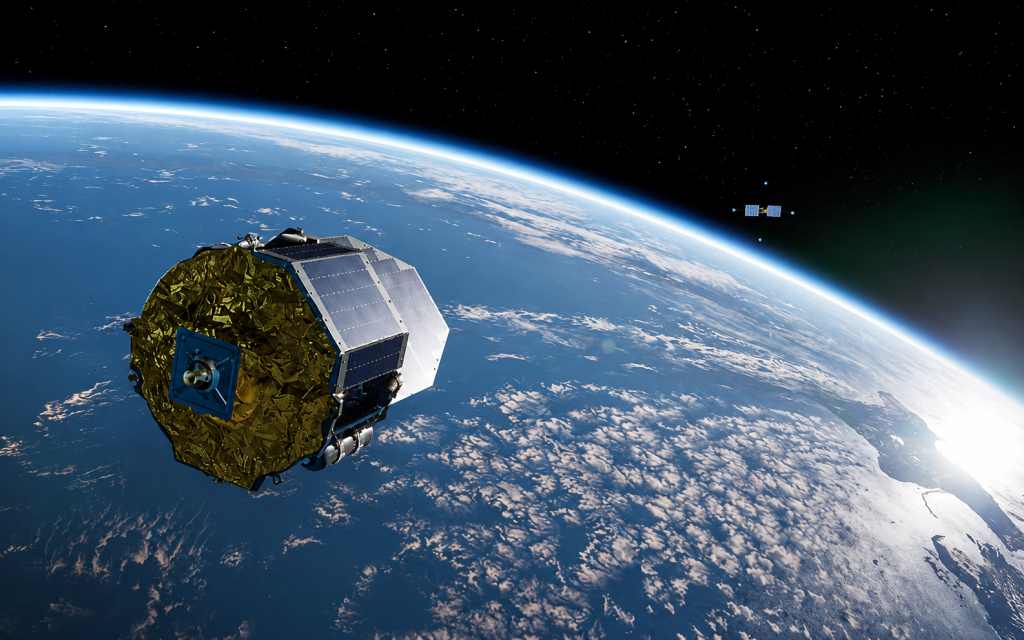
VICTUS HAZE: A New Benchmark in Responsive Space
For a rapid-response defense mission, what matters most is speed without compromise: a launch vehicle, a spacecraft, and a payload chain that all perform exactly as required, on a timeline measured in hours rather than months. VICTUS HAZE is precisely that test, and Anywaves is proud to have contributed our X-Band antenna to a mission that pushed the boundaries of what responsive space can achieve.
Conducted for the U.S. Space Force’s Space Systems Command (SSC), through its Space Safari Program Office, VICTUS HAZE is a Tactically Responsive Space (TacRS) mission designed to demonstrate how quickly the United States can field a capable spacecraft in response to an emerging threat in orbit. It is the third TacRS mission to date, following Victus Nox in 2023, and the first to combine a full responsive-launch demonstration with an operational Rendezvous and Proximity Operations campaign.
A Single Prime Contractor, End to End
What sets VICTUS HAZE apart is that, for the first time in a TacRS mission, a single prime contractor delivered the entire package. Rocket Lab designed, built, and tested its Pioneer spacecraft, launched it on its own Electron rocket, and is now operating it on orbit, all without relying on third-party subsystem suppliers for the spacecraft bus itself. Rocket Lab CEO Sir Peter Beck described the approach as transformative for the responsive-space domain, noting that having spacecraft ready for immediate deployment lets the United States and its allies reinforce national security space operations far faster than traditional acquisition timelines allow.
From Launch to On-Orbit Pursuit
Once in orbit, Pioneer’s task was to demonstrate Space Domain Awareness: the ability to rapidly approach, photograph, and monitor the behavior of another spacecraft in real time. Its target is JACKAL-0004, a spacecraft built by Colorado-based True Anomaly, which reached orbit in May 2026 as a rideshare passenger on a SpaceX Falcon 9. In the mission scenario, JACKAL plays the role of a non-compliant satellite that Pioneer must rendezvous with and characterize.
The two spacecraft are now running a series of one-on-one RPO scenarios, maneuvering close to one another to develop and refine the tactics, techniques, and procedures that the U.S. Space Force and its allies would rely on in a genuine orbital conflict scenario. As U.S. Space Force Lt. Col. Lincoln Miller put it, the mission shows that capability can be fielded in days rather than months, denying adversaries the advantage of being first to move into a contested orbit.
The Pioneer Spacecraft
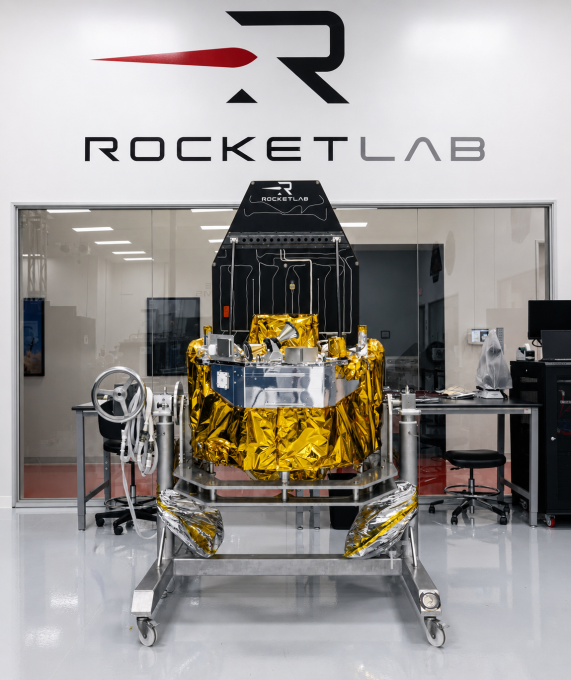
Pioneer is Rocket Lab’s own spacecraft line, vertically integrated into the company’s manufacturing processes much like its Electron launch vehicle. For VICTUS HAZE, this vertical integration was the key enabler of the mission’s speed: the spacecraft incorporates Rocket Lab’s in-house propulsion, solar arrays, reaction wheels, radio, star trackers, structures, propellant tanks, and flight software, removing the third-party supply chain delays that typically slow defense spacecraft programs.
Key Characteristics
- Highly maneuverable: built specifically to support complex, repeated orbital maneuvers required for RPO operations.
- Vertically manufactured: subsystems built in-house by Rocket Lab, ensuring compatibility and shortening integration timelines.
- Rapid commissioning: activated and ready for its first orbital maneuver in 37 hours 36 minutes, against a 72-hour requirement.
- Sensor payload: Pioneer carries an optical sensor for inspection and characterization of its RPO target.
- Mission operations: operated 24/7 by Rocket Lab from the ground, as part of a full design-build-launch-operate package.
Why Speed and Reliability Both Matter
Rendezvous and Proximity Operations are technically demanding under any circumstances, requiring precise maneuvering, reliable communications, and continuous telemetry between spacecraft and ground operators. Doing so within days of a launch order, rather than the months typically allotted for commissioning and checkout, raises the bar further. Every subsystem onboard Pioneer, including its payload telemetry link, had to perform correctly from first activation, with no opportunity for extended on-orbit troubleshooting before the RPO campaign began.
Anywaves’ X-Band Antenna Onboard
On a mission built around real-time observation of another spacecraft, the payload telemetry link is what turns Pioneer’s optical data into usable intelligence on the ground. That is the role of the Anywaves Compact X-Band Payload Telemetry Antenna flying onboard.
A Compact, High-Gain Solution for Payload Downlink
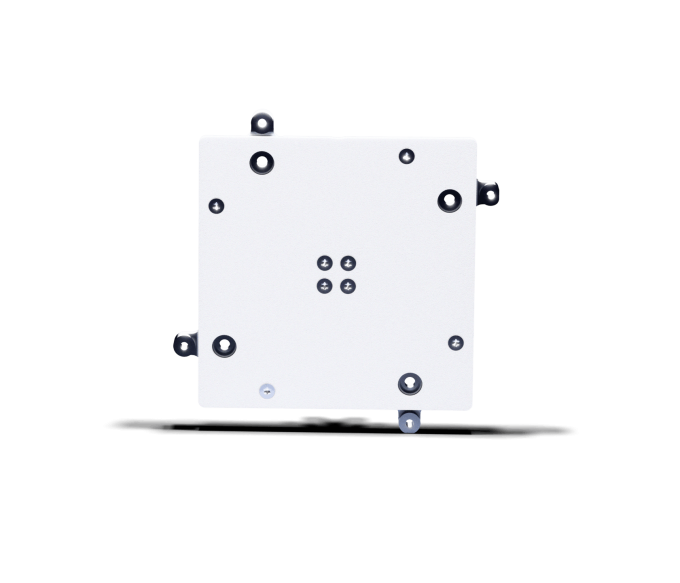
Anywaves’ Compact X-Band antenna was designed for exactly this kind of mission profile: a small, maneuverable spacecraft that needs to get high volumes of payload data to the ground quickly and reliably.
- Ultra-compact form factor: under 1U, with an envelope of 100 x 100 x 6.5 mm and a mass of just 70 g, making it well suited to small, highly maneuverable platforms like Pioneer.
- High transmitting gain: 15.5 dBi at 8.2 GHz (RHCP version), enabling a high-data-rate downlink for payload telemetry across the 7.9–8.5 GHz frequency band.
- Flight-proven, TRL 9: a heritage design with demonstrated on-orbit performance, reducing integration risk on a mission where every subsystem had to work right the first time.
- Radome-protected and ITAR-free: built to withstand harsh launch and orbital environments, with the export flexibility that defense and commercial programs alike require.
Supporting a Time-Critical Payload Chain
On VICTUS HAZE, the value of the optical sensor’s RPO observations depends entirely on getting that data down to operators in a timely, high-quality form. Anywaves’ X-Band antenna provides the narrow-beam, single circular polarization downlink that supports this kind of high-data-rate payload telemetry, helping ensure that imagery and characterization data from Pioneer’s pursuit of JACKAL-0004 reaches the ground with the gain and link margin the mission requires.
It is precisely the kind of subsystem reliability that a mission like VICTUS HAZE has no room to compromise on: commissioned in under 38 hours, with no extended shakeout period, the payload downlink had to perform from day one.
Mission Status and What Comes Next
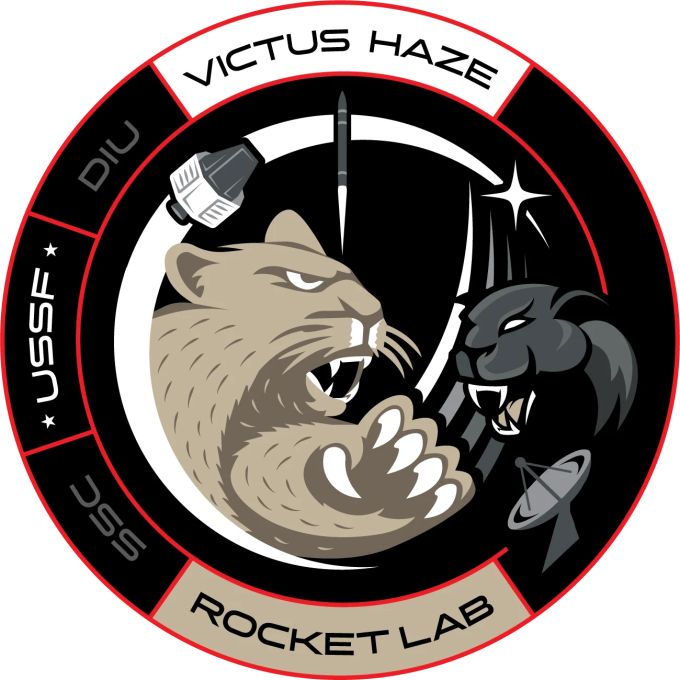
Current Status
- Electron launched Pioneer into low Earth orbit on 19 June 2026, 16 hours 42 minutes after Notice to Launch.
- Pioneer was fully commissioned in 37 hours 36 minutes, well ahead of the mission’s 72-hour deadline.
- Pioneer and True Anomaly’s JACKAL-0004 are now conducting one-on-one Rendezvous and Proximity Operations in low Earth orbit.
- Rocket Lab is managing 24/7 on-orbit operations for the Pioneer spacecraft.
What’s Ahead for TacRS
VICTUS HAZE completes what the U.S. Space Force has described as the program’s “crawl, walk, run” demonstration phase for Tactically Responsive Space. Space Systems Command has three further TacRS missions planned: Victus Surgo and Victus Salo, which will further demonstrate on-orbit maneuverability, and Victus Sol, which will deploy an operational payload to orbit.
Together, these missions point toward a future where responsive space access, rapid spacecraft commissioning, and reliable on-orbit operations become standard tools for national security space, rather than rare demonstrations.
Conclusion
VICTUS HAZE shows what becomes possible when launch, spacecraft, and operations are integrated under a single, vertically built program: a responsive-space mission executed in hours rather than months, with every subsystem performing as required from first activation.
For Anywaves, contributing our Compact X-Band Payload Telemetry Antenna to Pioneer’s payload chain is a demonstration of how a compact, flight-proven antenna can support demanding, time-critical defense missions where there is no margin for subsystem failure.
As the Tactically Responsive Space program moves toward its next missions, we look forward to continuing to support the rapid, reliable space access that today’s security and defense missions demand.
If you are designing a responsive-space or defense mission and need a reliable, flight-proven X-Band antenna for payload telemetry, get in touch with our team.

