Compact X-Band Antenna
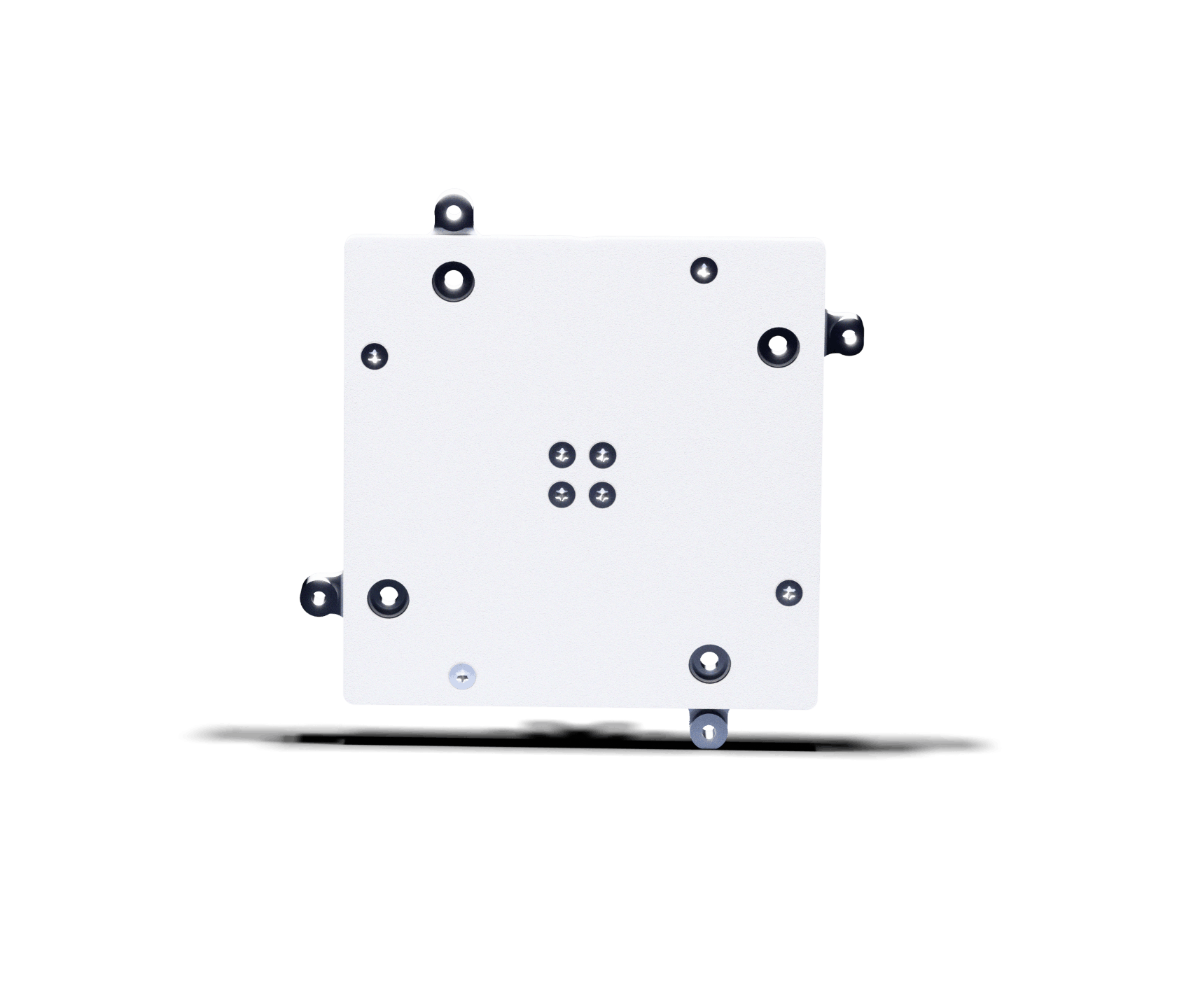
Technical specifications
High gain. Ultra-thin. Built for payload downlink.
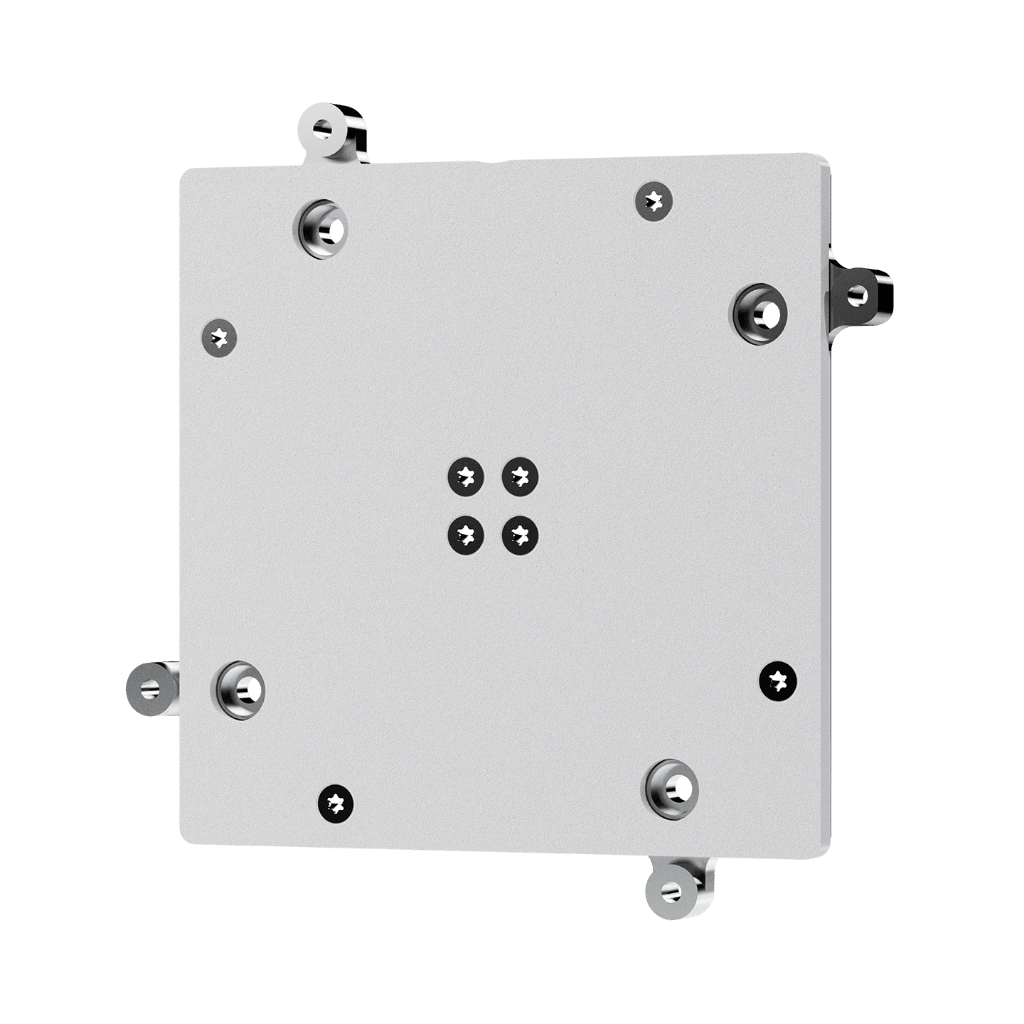
15.5 dBi
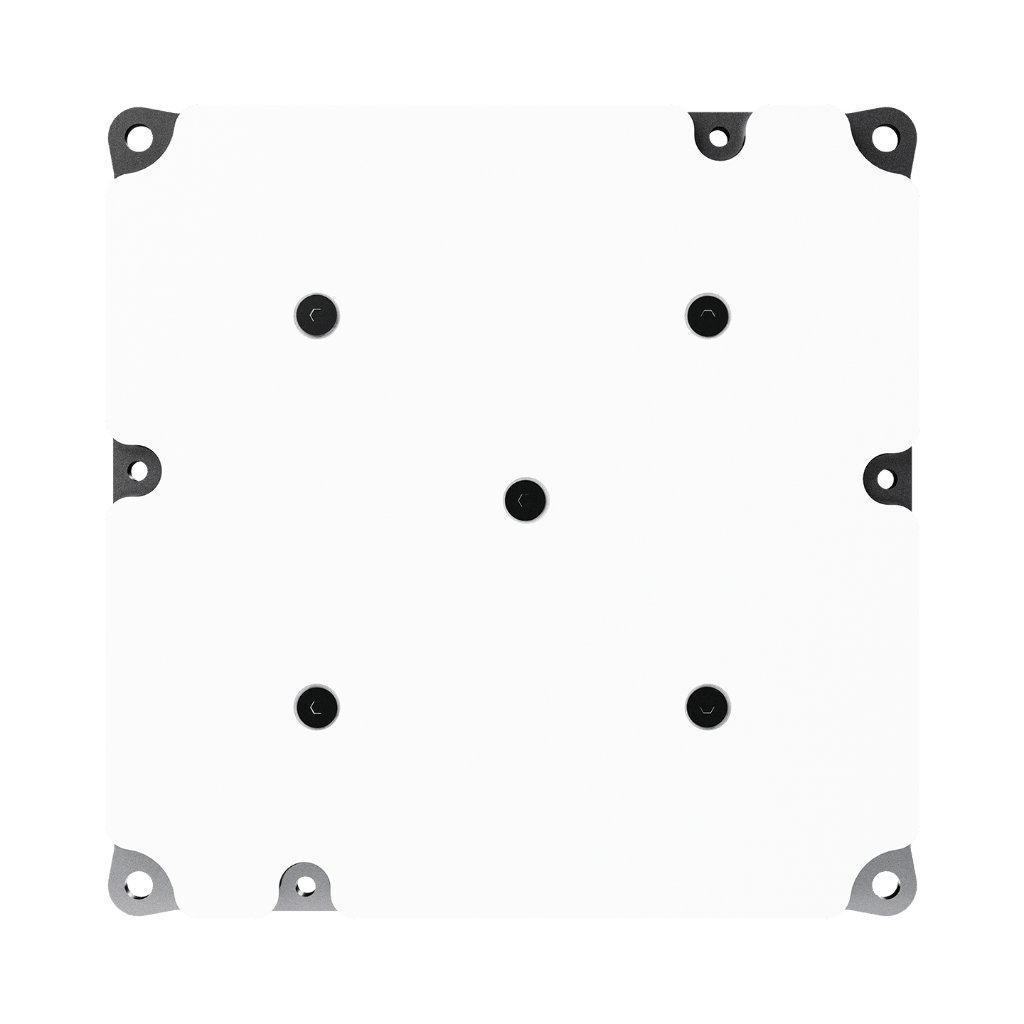
The Compact X-Band Antenna packs a realized gain of 15.5 dBi at 8.2 GHz into an envelope of just 100 × 100 × 16.2 mm with a protruding height of only 6.5 mm above the satellite panel. This ultra-low profile makes it the ideal choice for platforms with tight surface constraints, while its directive broadside beam maximises the data-rate transferred during each ground station pass.
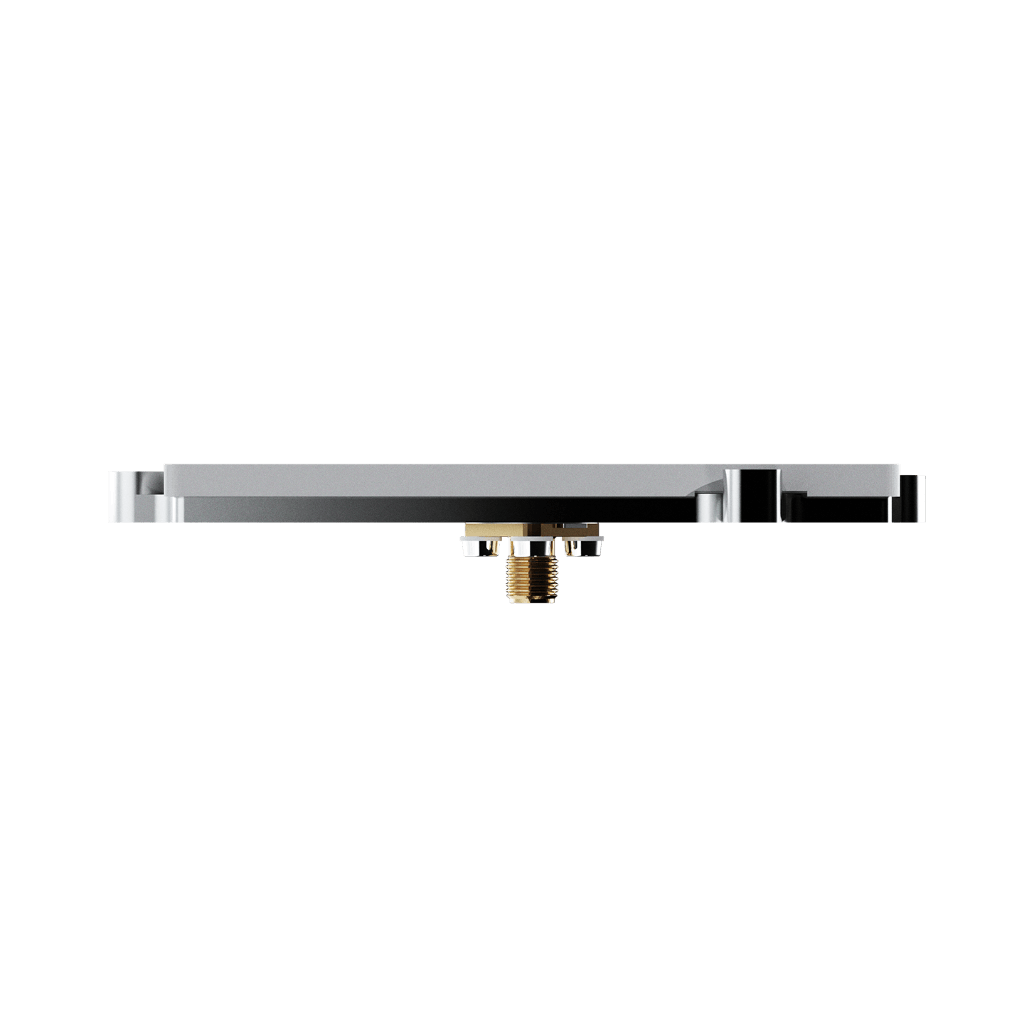
PEEK radome for harsh environment protection
The antenna is protected by a PEEK radome coated with SG121FD white paint on flight models, providing thermal protection of internal parts, as well as and electrostatic discharges. The radome maintains consistent RF performance — including the exceptional axial ratio of less than 1 dB for elevation angles from 0° to ±5° — throughout the full mission lifetime.
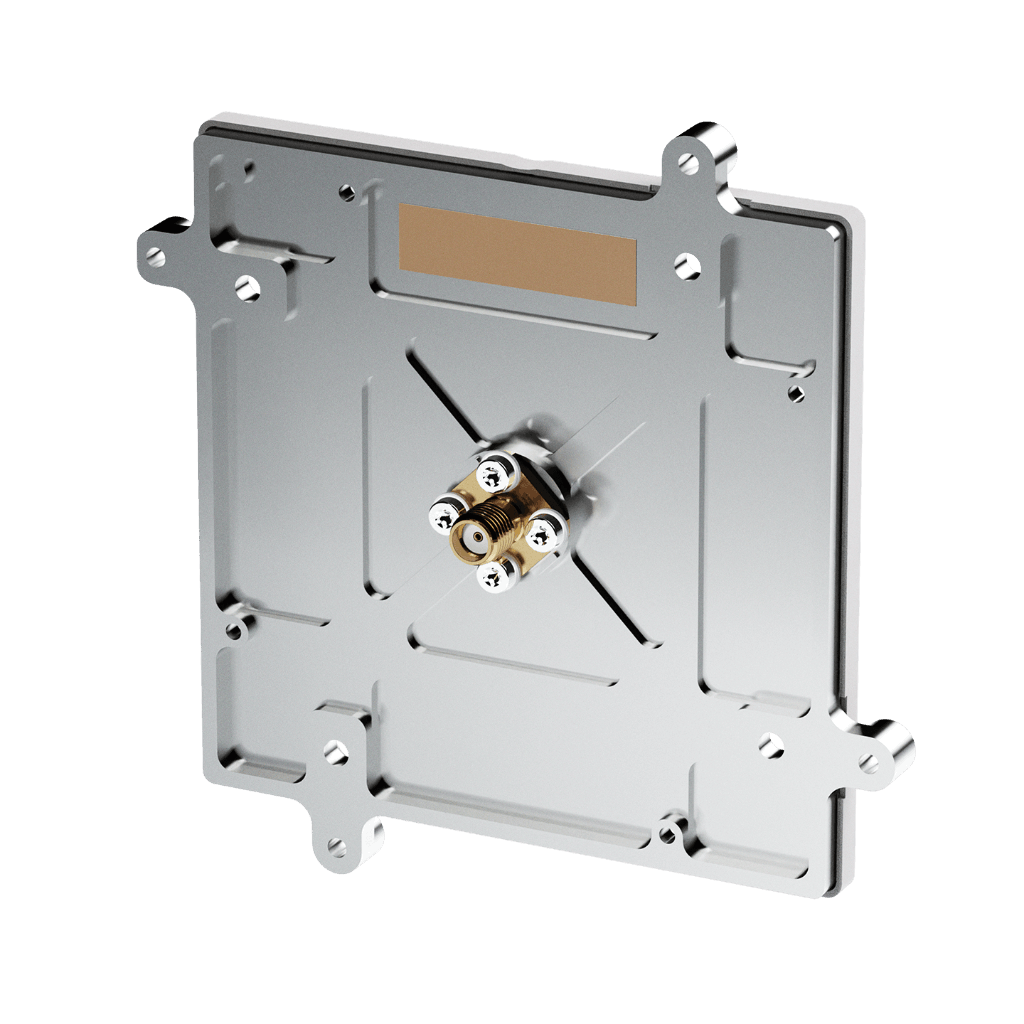
Size < 1U — compatible with any LEO platform
Featuring a footprint of 100 × 100 mm and a mass of 70 g, the Compact X-Band Antenna fits within a 1U CubeSat surface and imposes a minimal mass budget impact. With a bandwidth of 600 MHz (7.9–8.5 GHz) and a radiation efficiency above 70%, it delivers high-quality payload telemetry downlink performance on board of any LEO satellite platform, ranging from 1U CubeSats to larger small satellites.
Our flagship X-Band payload data downlink antenna
The Anywaves Compact X-Band Antenna is a TRL 9, flight-proven antenna for payload telemetry downlink from LEO satellites to ground stations. Operating from 7.9 to 8.5 GHz with a realized gain of 15.5 dBi at 8.2 GHz, it enables high data rate links in a 100 × 100 mm footprint with just 6.5 mm of protrusion above the satellite panel. Available in LHCP or RHCP, it provides high-quality single circular polarization with an axial ratio below 1 dB at boresight.
Designed for nanosatellites and LEO platforms, the Compact X-Band Antenna features a directive narrow beam (~20° HPBW) that concentrates all RF energy towards the ground station during the pass, maximising data throughput. Its PEEK radome ensures protection against thermal and radiation environments. Compatible with the Anywaves Test Hat for X-Band Antennas, it is supplied with full acceptance testing on flight models. ITAR Free.

Complete EIDP
At the delivery of your antennas, you will receive a complete EIDP (End Item Data Package) including: RF acceptance test reports, ICD (Interface Control Document), Mechanical envelope, User Manual, Certificate of conformity.

In-Depth Engineering Support
During the full length of your antennas project, you’ll benefit from an in-depth and tailored support from our experienced engineers. They’ll answer all of your questions and ensure that our antennas meet your missions’ needs.

Further Testing Available On Demand
If needed, we can perform additional on-demand tests on your antennas to guarantee their performance in the specific environment and conditions of your spacecraft.

Specific Requests Analysis With Experts
In the case you need additional information and performance results, our experts can conduct complementary analysis based on your requirements (mechanical, thermal, radio-frequency performances on platform etc.).




You might also like

More data from every pass. Proven in orbit.
Tell us about your payload and downlink requirements. Our engineers will help you get the most out of your X-Band data link.
Questions & Answers
-
What is a payload data downlink antenna and how is it different from a TT&C antenna?
A payload data downlink antenna is dedicated to transmitting the actual payload data — images, radar data, scientific measurements — from the satellite to the ground station. It typically operates at a higher frequency (X-Band, 8–12 GHz) and uses a directive, high-gain beam to concentrate all RF power towards the ground station during the pass, maximising data throughput. A TT&C (Telemetry, Tracking and Control) antenna, by contrast, is usually lower frequency (S-Band), omnidirectional, and designed for housekeeping data and command uplink — requiring coverage across all attitudes rather than peak directional gain.
-
Why X-Band for payload data downlink?
X-Band (8–12 GHz) is the dominant frequency range for satellite payload data downlink because it offers wide available bandwidth, strong link budgets at LEO altitudes, and is natively supported by the majority of commercial and institutional ground station networks worldwide. The Anywaves Compact X-Band Antenna operates from 7.9 to 8.5 GHz, covering the standard ITU X-Band Earth-to-space and space-to-Earth allocations used by Earth observation and remote sensing missions.
-
What data rate can I achieve with the Compact X-Band Antenna?
The achievable data rate depends on your link budget — orbit altitude, ground station antenna size, modulation scheme and coding. The Compact X-Band Antenna provides 15.5 dBi of realized gain at 8.2 GHz with a radiation efficiency above 70%, which is the antenna’s contribution to the link budget. Typical Earth observation missions using this antenna in LEO achieve data rates of several hundred Mbps to over 1 Gbps, depending on the RF chain and modulation used. Contact our engineers for a link budget assessment tailored to your mission.
-
Can the Compact X-Band Antenna be used in both LHCP and RHCP?
Yes, but each unit features a single polarisation — either LHCP or RHCP. The choice of polarisation is made at procurement and determines the physical configuration of the antenna. If your mission requires both polarisations simultaneously, Anywaves offers the Compact X-Band Dual-Polarized Antenna, which supports LHCP and RHCP simultaneously on two separate connectors.
-
Is the Compact X-Band Antenna compatible with the Anywaves Test Hat?
Yes. The Compact X-Band Antenna is compatible with the Anywaves Test Hat for X-Band Antennas, allowing RF functional testing of the antenna while it is already integrated on the spacecraft — without requiring demounting. This significantly simplifies RF verification during final integration and at the launch site.
-
What is the Half Power Beam Width of the Compact X-Band Antenna, and what does it mean for operations?
The Compact X-Band Antenna has a Half Power Beam Width (HPBW) of approximately 20° (±10°). This narrow beam means the antenna must be pointed towards the ground station to achieve maximum gain during a pass. On a 3-axis stabilised spacecraft, this is typically managed by the ADCS. The narrower the beam, the higher the gain — and therefore the higher the achievable data rate — but it also requires accurate attitude control during the downlink window.
Compact X-Band antenna: high-gain payload data downlink for LEO satellites
The Anywaves Compact X-Band Antenna is a TRL 9, flight-proven antenna for payload telemetry downlink from LEO satellites to ground stations. Operating from 7.9 to 8.5 GHz (600 MHz bandwidth) with a realized gain of 15.5 dBi at 8.2 GHz, it delivers high data rate X-Band downlink performance in an ultra-compact 100 × 100 mm footprint, with a protruding height of just 6.5 mm above the satellite panel. Available in LHCP or RHCP, it features an axial ratio below 1 dB from 0° to ±5° and a Half Power Beam Width of approximately 20°.
