LEO-PNT Antennas

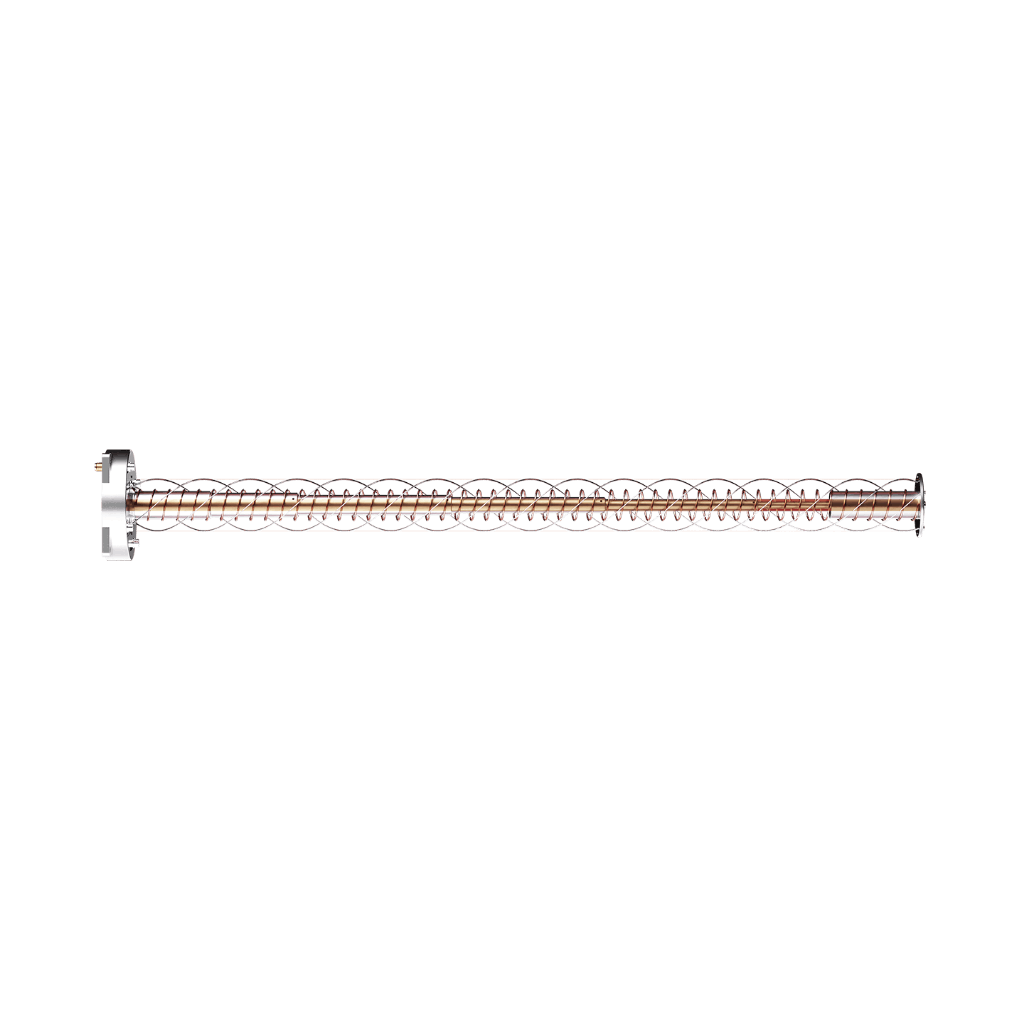
Our LEO-PNT antennas are designed to re-radiate GNSS signals from orbit, contributing to emerging multi-layer PNT architectures. By adding a LEO layer to traditional GNSS constellations, they improve positioning accuracy, signal availability and service robustness, particularly in challenging environments.
Operating across multiple frequency bands and constellations, these antennas enable new navigation services and enhanced resilience. Designed, manufactured and qualified in-house, they support advanced payload missions where positioning performance is a critical system driver.


Contact us
Working on a LEO-PNT or GNSS augmentation mission? Our team can support you in defining the right antenna architecture based on your coverage, performance and system constraints.
Questions
& Answers
-
What is a LEO-PNT antenna?
A LEO-PNT antenna is a payload antenna designed to transmit navigation signals from Low Earth Orbit. It re-radiates GNSS signals or generates new navigation signals to support positioning, navigation and timing services from space.
-
What is LEO-PNT and why is it important?
LEO-PNT refers to navigation systems based on satellites in Low Earth Orbit. Unlike traditional GNSS constellations in MEO, LEO systems improve signal strength, availability and resilience, particularly in urban environments, polar regions or areas with degraded GNSS coverage.
-
How does LEO-PNT complement traditional GNSS?
LEO-PNT systems act as an additional layer complementing existing GNSS constellations. By providing stronger signals and different orbital geometries, they improve accuracy, reduce signal blockage and enhance robustness against interference or outages.
-
What is GNSS re-radiation?
GNSS re-radiation consists of receiving navigation signals and retransmitting them from orbit. This enables enhanced coverage and signal availability, especially in areas where direct GNSS reception is limited or degraded.
-
Why are circular polarization and isoflux patterns important?
Circular polarization ensures compatibility with GNSS receivers and stable signal reception. Isoflux radiation patterns enable uniform signal distribution over the Earth’s surface, ensuring consistent navigation performance across coverage areas.
-
What antenna technologies are used for LEO-PNT?
Common technologies include quadrifilar helix antennas, deployable helical antennas and array-based designs. These architectures provide the required polarization, coverage and RF performance for navigation payloads
-
What are the main challenges in LEO-PNT antenna design?
Key challenges include achieving uniform ground coverage, maintaining signal stability across frequencies, ensuring compact stowed configurations and managing deployment mechanisms, while preserving RF performance in orbit.
-
Are LEO-PNT antennas compatible with small satellites?
Yes. Many LEO-PNT antennas are designed for CubeSat and SmallSat platforms, using compact and deployable architectures to balance performance and volume constraints.
-
Are your LEO-PNT antennas flight-proven?
Yes. Our LEO-PNT antennas are part of missions such as ESA’s LEO-PNT IOD mission, where they contribute to validating next-generation navigation architectures and services.
-
At what stage should LEO-PNT antenna design be defined?
LEO-PNT antenna design should be addressed early in the mission definition phase, as it directly impacts system architecture, signal performance and constellation design. Early definition ensures alignment between payload objectives and RF capabilities.
LEO-PNT antennas for next-generation satellite navigation
Anywaves designs and manufactures LEO-PNT antennas for satellite missions, enabling next-generation positioning, navigation and timing services from Low Earth Orbit. Our space-qualified antennas support GNSS signal re-radiation and multi-layer PNT architectures, improving accuracy, availability and resilience. Designed, manufactured and tested in-house, our solutions help spacecraft manufacturers develop advanced navigation payloads and future GNSS augmentation systems.
