GNSS All-Bands Antenna
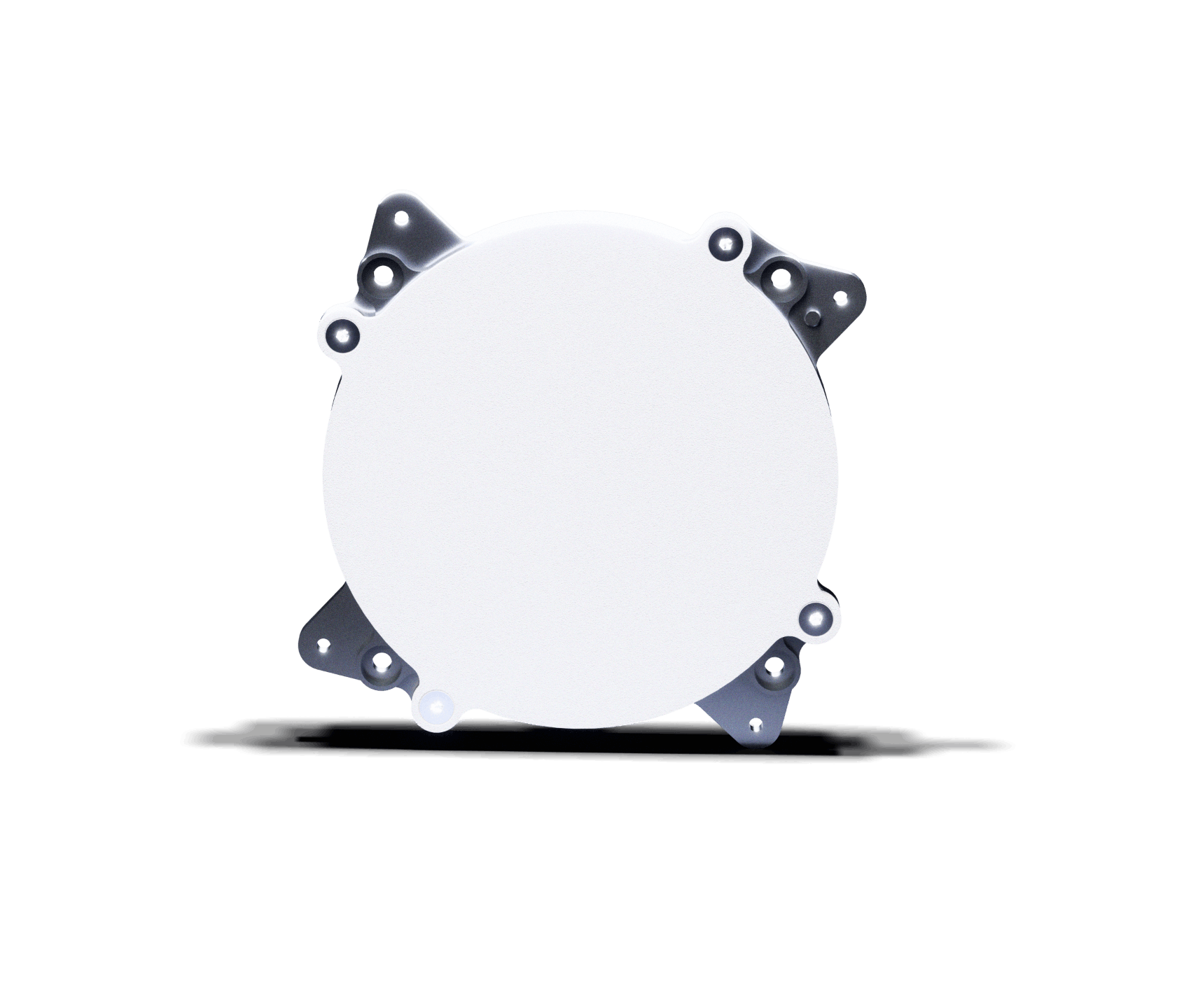
Technical specifications
Galileo E1/E5a/E5b/E6,
GLONASS G1/G2/G3,
BeiDou B1/B2a/B2/B3,
IRNSS L5, QZSS L6
(external protruding height: 8.6 mm)
One antenna. All constellations. No signal blackout.
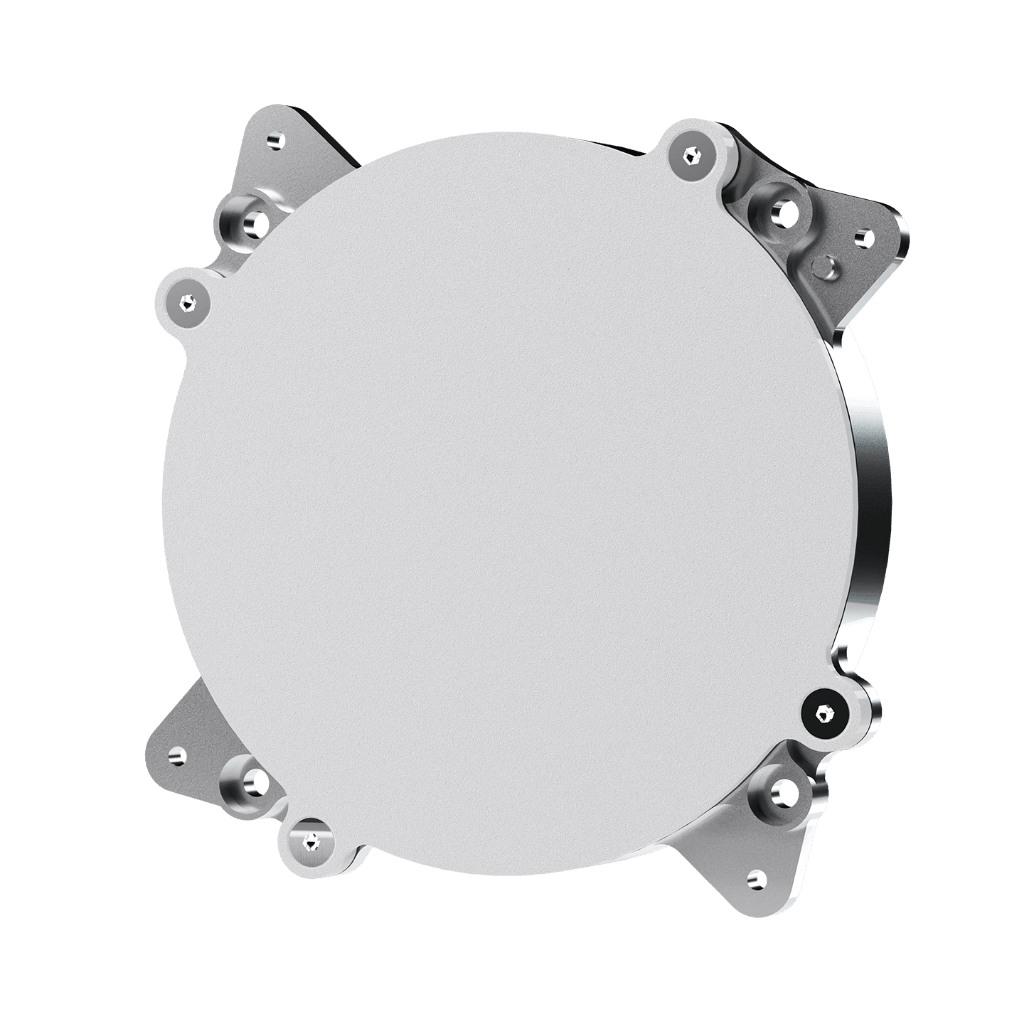
The only antenna covering all GNSS bands simultaneously
The Anywaves GNSS All-Bands Antenna simultaneously receives GPS L1/L2/L5, Galileo E1/E5a/E5b/E6, GLONASS G1/G2/G3, BeiDou B1/B2a/B2/B3, IRNSS L5, QZSS L6 — all from a single compact aperture. This means a satellite operator never needs to choose which constellation to support, and never faces a signal blackout if one constellation becomes temporarily unavailable. Developed under ESA’s NAVISP programme, it is the only product of its kind available on the market.
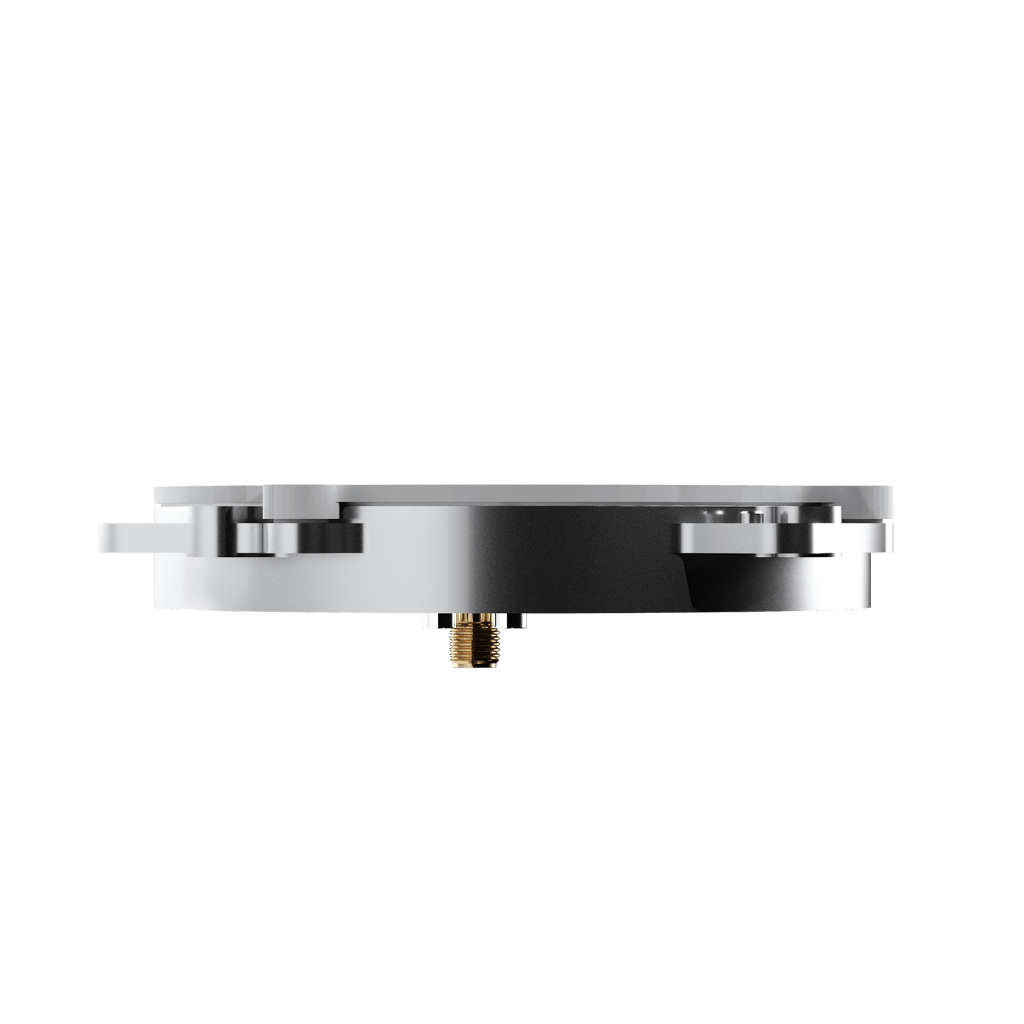
Very stable phase center. Variation within a sphere <4.7 mm across all GNSS bands
For GNSS navigation, phase center stability is the critical performance criterion: any variation in the antenna’s phase center with frequency or elevation angle directly introduces navigation errors. The Anywaves GNSS All-Bands Antenna holds phase center variation within a sphere of radius <4.7 mm across all bands (±30° FoV), and within <1.8 mm for individual sub-bands — ensuring consistent, high-accuracy positioning across the full operational range.
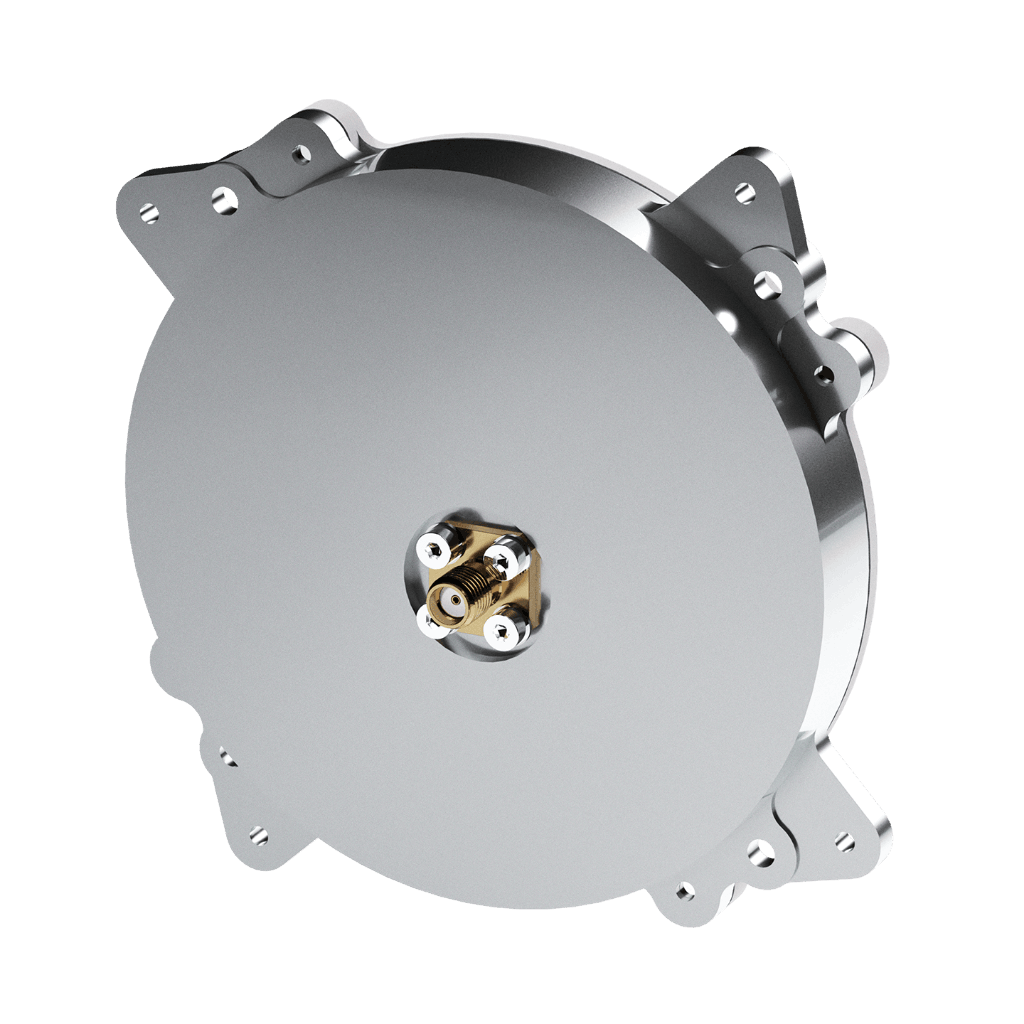
Space-proven radome — radiation and ESD resistant
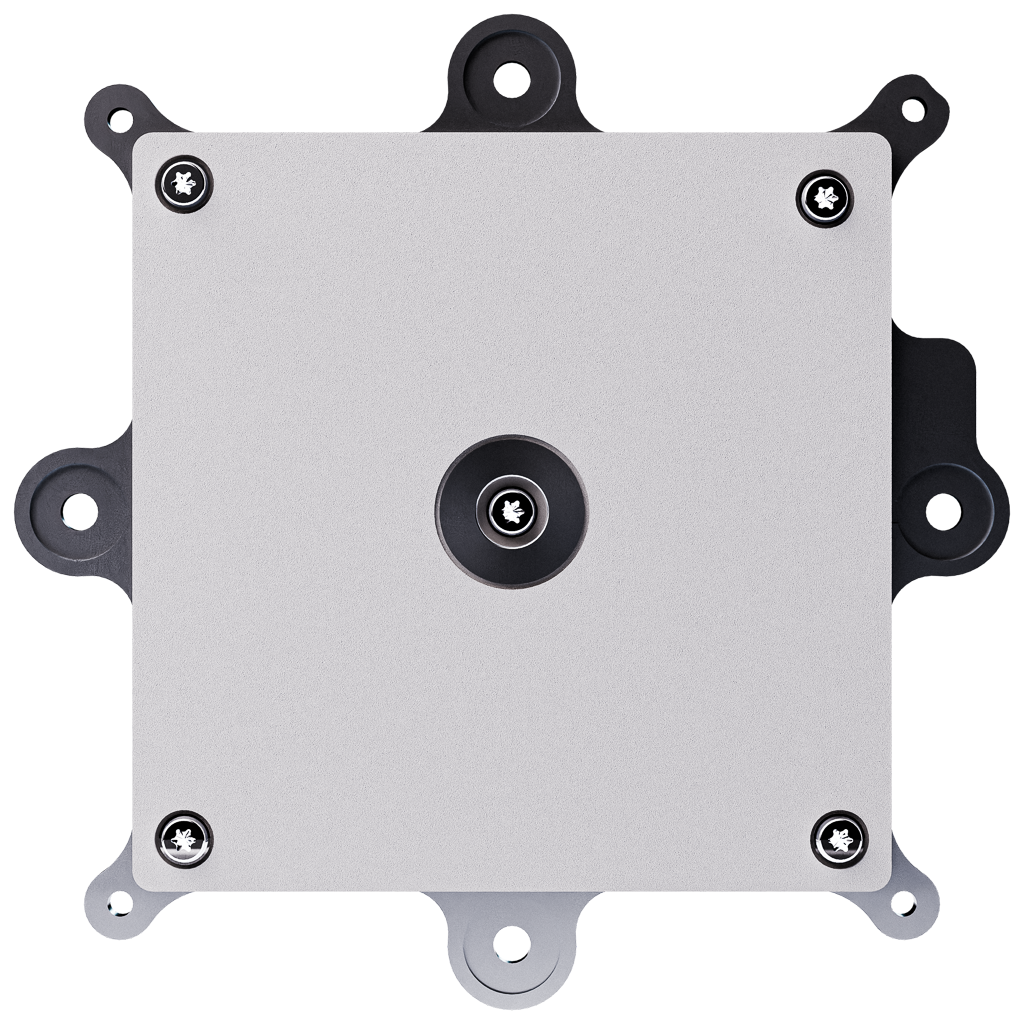
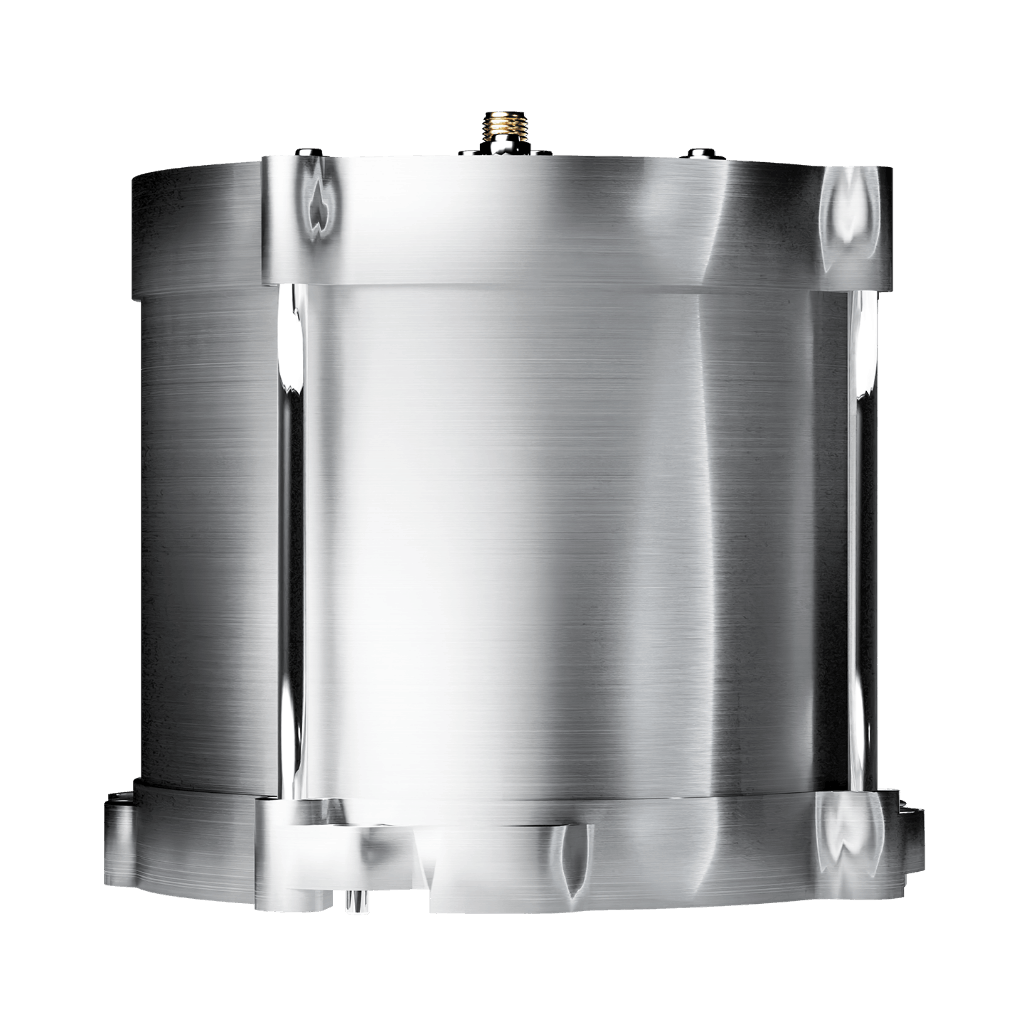
The antenna is protected by a PEEK radome coated with SG121FD white paint on flight models, providing thermal protection of the antenna’s internal parts, and enhanced tolerance with respect to radiation and electrostatic discharges. At 99.4 × 99.4 mm and 130 g, it integrates directly onto any 1U CubeSat surface or LEO platform mounting panel, with a group delay variation below 1.2 ns ensuring timing accuracy across all GNSS bands.
All-constellation GNSS reception in a single 1U antenna
The Anywaves GNSS All-Bands Antenna is the only antenna on the market capable of receiving all GNSS constellations simultaneously — GPS, Galileo, GLONASS, BeiDou, IRNSS, QZSS — from a single 99.4 × 99.4 mm aperture. Developed under ESA’s NAVISP programme, it provides the signal diversity needed for precise, resilient satellite positioning without the risk of signal blackouts if one constellation becomes unavailable. It is the reference choice for LEO missions requiring high-accuracy on-board navigation
Its phase center is stable within a sphere of radius <4.7 mm across all bands and <1.8 mm within individual sub-bands (±30° FoV), with an elevation variation below 0.4 mm within ±30° — the key performance criterion for GNSS navigation accuracy. At 130 g with a protruding height of 8.7 mm, it fits within any 1U CubeSat surface. RHCP polarization, PEEK radome with anti-ESD coating, Test Hat compatible, full acceptance testing on flight models. ITAR Free.

Complete EIDP
At the delivery of your antennas, you will receive a complete EIDP (End Item Data Package) including: RF acceptance test reports, ICD (Interface Control Document), Mechanical envelope, User Manual, Certificate of conformity.

In-Depth Engineering Support
During the full length of your antennas project, you’ll benefit from an in-depth and tailored support from our experienced engineers. They’ll answer all of your questions and ensure that our antennas meet your missions’ needs.

Further Testing Available On Demand
If needed, we can perform additional on-demand tests on your antennas to guarantee their performance in the specific environment and conditions of your spacecraft.

Specific Requests Analysis With Experts
In the case you need additional information and performance results, our experts can conduct complementary analysis based on your requirements (mechanical, thermal, radio-frequency performances on platform etc.).

All constellations. One antenna. No compromises.
Tell us about your mission navigation requirements. Our engineers will help you integrate the GNSS All-Bands Antenna for maximum positioning accuracy and signal resilience.
Questions & Answers
-
What does ‘All-Bands’ mean, and which GNSS constellations does this antenna cover?
‘All-Bands’ means the antenna receives all currently operational GNSS frequency bands in a single unit, with no need for a separate antenna per constellation. The Anywaves GNSS All-Bands Antenna covers: GPS L1 (1 575.42 MHz), L2 (1 227.60 MHz) and L5 (1 176.45 MHz); Galileo E1 (1 575.42 MHz), E5a (1 176.45 MHz), E5b (1 207.14 MHz) and E6 (1 278.75 MHz); GLONASS G1 (1 602 MHz), G2 (1 246 MHz) and G3 (1 202.025 MHz); BeiDou B1 (1 561.098 MHz), B2a (1 176.45 MHz), B2 (1 207.14 MHz) and B3 (1 268.52 MHz); IRNSS L5, QZSS L6. The full operating range spans 1 160 MHz to 1 610 MHz.
-
Why is phase center stability important for GNSS navigation?
In GNSS receivers, the received signal is processed assuming the antenna’s phase center — the point from which the signal appears to originate — is fixed and known. If the phase center shifts with frequency, elevation angle or temperature, the GNSS receiver will compute an incorrect range measurement and introduce navigation errors. For satellites, where precise orbit determination errors translate directly into mission performance degradation, phase center stability is therefore a critical antenna specification. The Anywaves GNSS All-Bands Antenna holds phase center variation within a sphere of radius <4.7 mm across all bands and <1.8 mm per individual sub-band (±30° FoV), with elevation-driven variation below 0.4 mm within ±30°.
-
What is the difference between the GNSS All-Bands Antenna and the GNSS L1/E1 Antenna?
The GNSS L1/E1 Bands Antenna is optimised for a single frequency layer (the L1/E1 band at approximately 1 575 MHz), used primarily for single-frequency positioning applications. The GNSS All-Bands Antenna covers the full 1 160–1 610 MHz range, enabling multi-frequency, multi-constellation reception. Multi-frequency GNSS is essential for applications requiring high-accuracy positioning (as it allows ionospheric error correction using dual-frequency processing), signal resilience (multiple frequencies per constellation).
-
Can the GNSS All-Bands Antenna be used with the GNSS All-Bands Launcher Antenna for reusable launch vehicle applications?
The GNSS All-Bands Antenna and the GNSS All-Bands Launcher Antenna are two separate products sharing the same frequency coverage but designed for different environments. The standard GNSS All-Bands Antenna is optimised for satellite applications in LEO. The GNSS All-Bands Launcher Antenna is specifically designed for the thermal and mechanical constraints of launch vehicle applications. For missions requiring GNSS coverage both during launch and in orbit, the two products can be used in complementary roles on the same spacecraft.
-
Is the GNSS All-Bands Antenna compatible with the Anywaves Test Hat?
Yes. The GNSS All-Bands Antenna is compatible with the Anywaves Test Hat for GNSS All-Bands Antennas, allowing RF functional testing of all GNSS bands while the antenna is integrated on the spacecraft. This simplifies RF verification during final integration and at the launch site, without requiring demounting.
GNSS all-bands antenna: the only single-unit solution covering all GNSS constellations
The Anywaves GNSS All-Bands Antenna is a TRL 9 navigation antenna for LEO satellites, covering the full 1 160 MHz to 1 610 MHz frequency range to receive all GNSS constellations simultaneously: GPS L1/L2/L5, Galileo E1/E5a/E5b/E6, GLONASS G1/G2/G3, BeiDou B1/B2a/B2/B3, IRNSS L5, QZSS L6 and INMARSAT L-band (1 525–1 559 MHz). Developed under ESA’s NAVISP programme, it is the only antenna of its kind on the market. Right Hand Circular Polarization. Realized gain above 0 dBi at boresight.
Phase center stability — the critical navigation accuracy parameter — is held within a sphere of radius <4.7 mm across all bands and <1.8 mm per sub-band (±30° FoV), with elevation variation below 0.4 mm within ±30° and group delay variation below 1.2 ns. Envelope: 99.4 × 99.4 × 15.2 mm (protruding height 8.7 mm), mass 130 g, size <1U. PEEK radome with anti-ESD coating. Qualification
