Ka-band TT&C Antenna
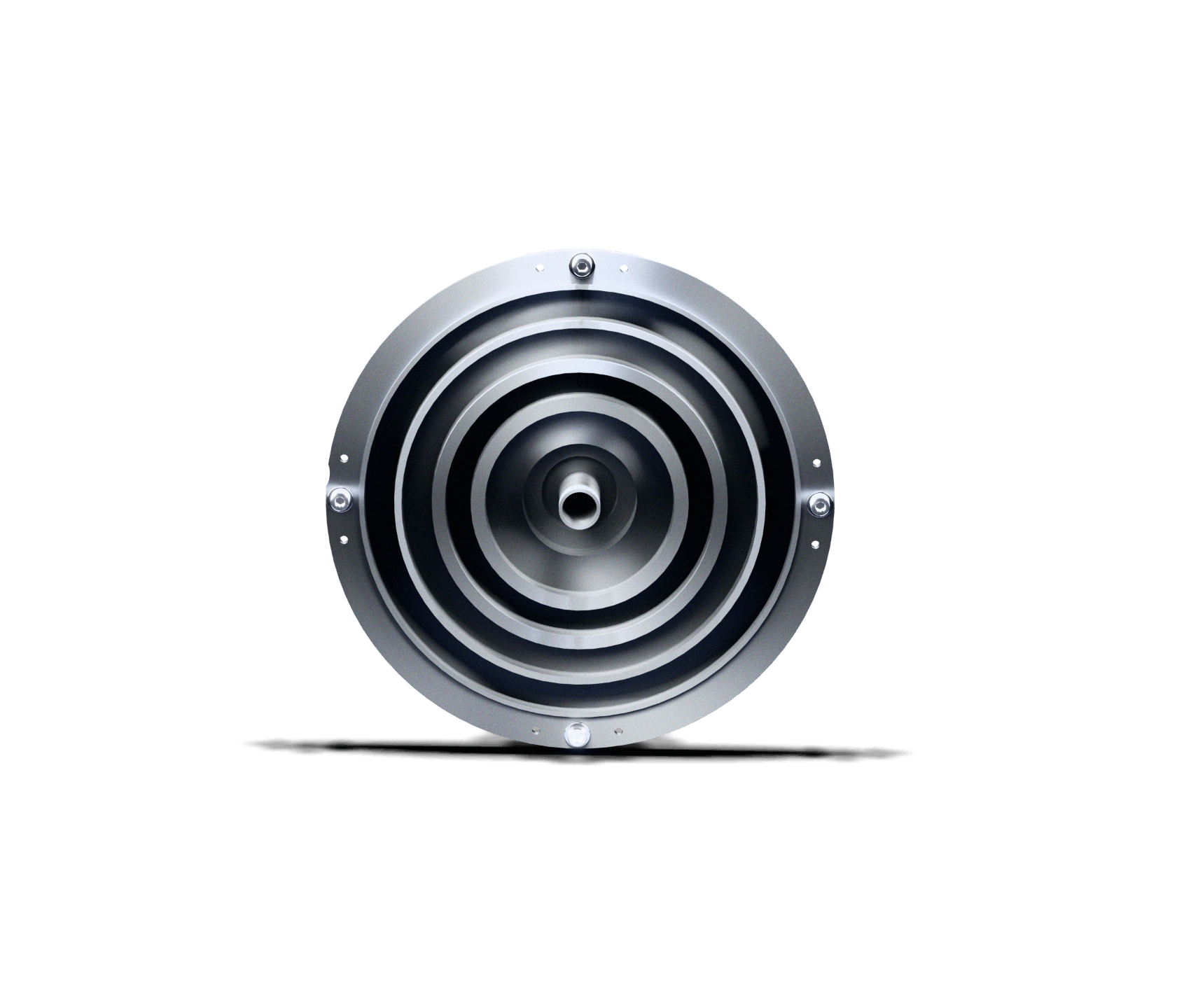
Technical specifications
Option 3: LHCP in Rx and RHCP in Tx channels (or vice versa)
Option 2 : (Tx) 150 × 150 × 60 mm
Option 3 : (Rx/Tx) 90 × 90 × 40 mm
Option 2: Tx: > 3 dBi @ boresight | > 0 dBi @ ±80°
Option 3: Rx/Tx:
– Tx band: > 4 dBi @ boresight | > 0 dBi @ ±67°
– Rx band: > 8 dBi @ boresight | > 0 dBi @ ±60°
Option 2 : Tx: < 140 g
Option 3 : Rx/Tx : < 80 g
Engineered for Ka-Band reliability
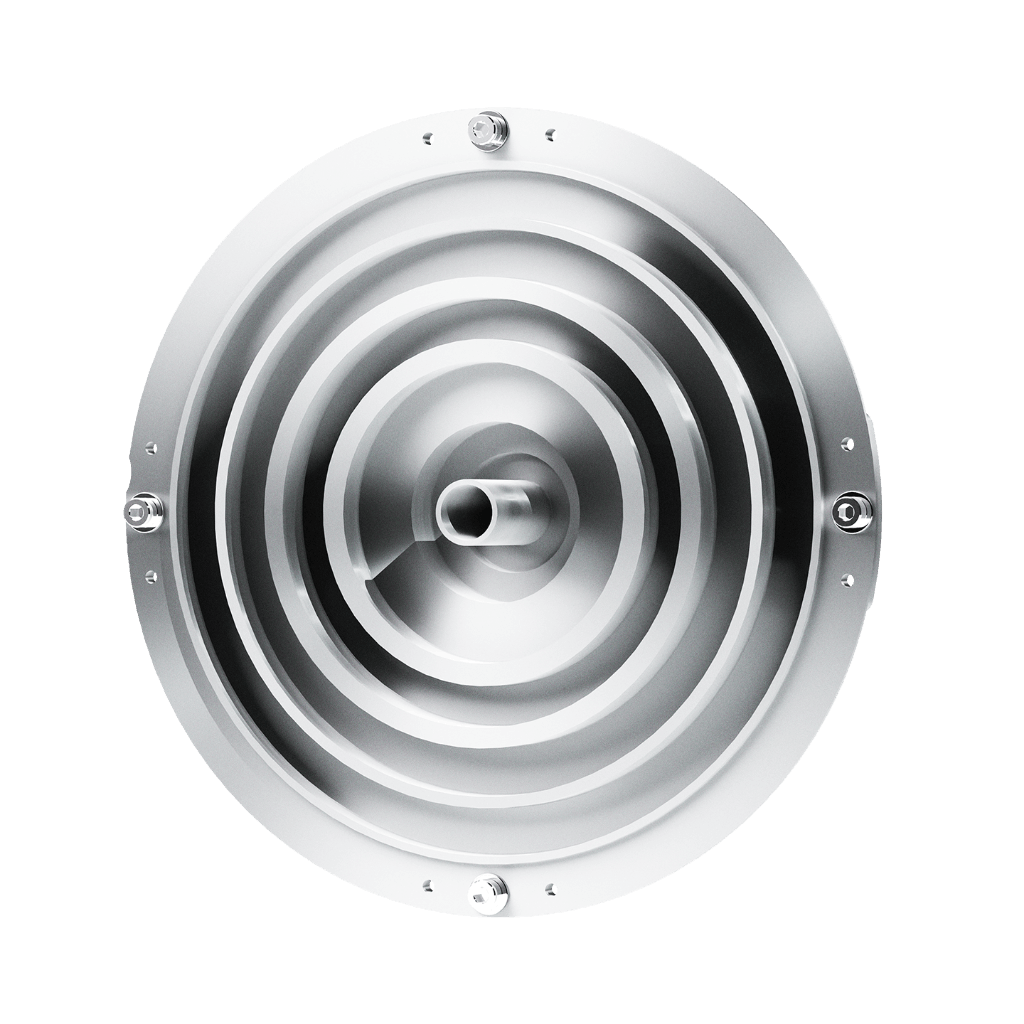
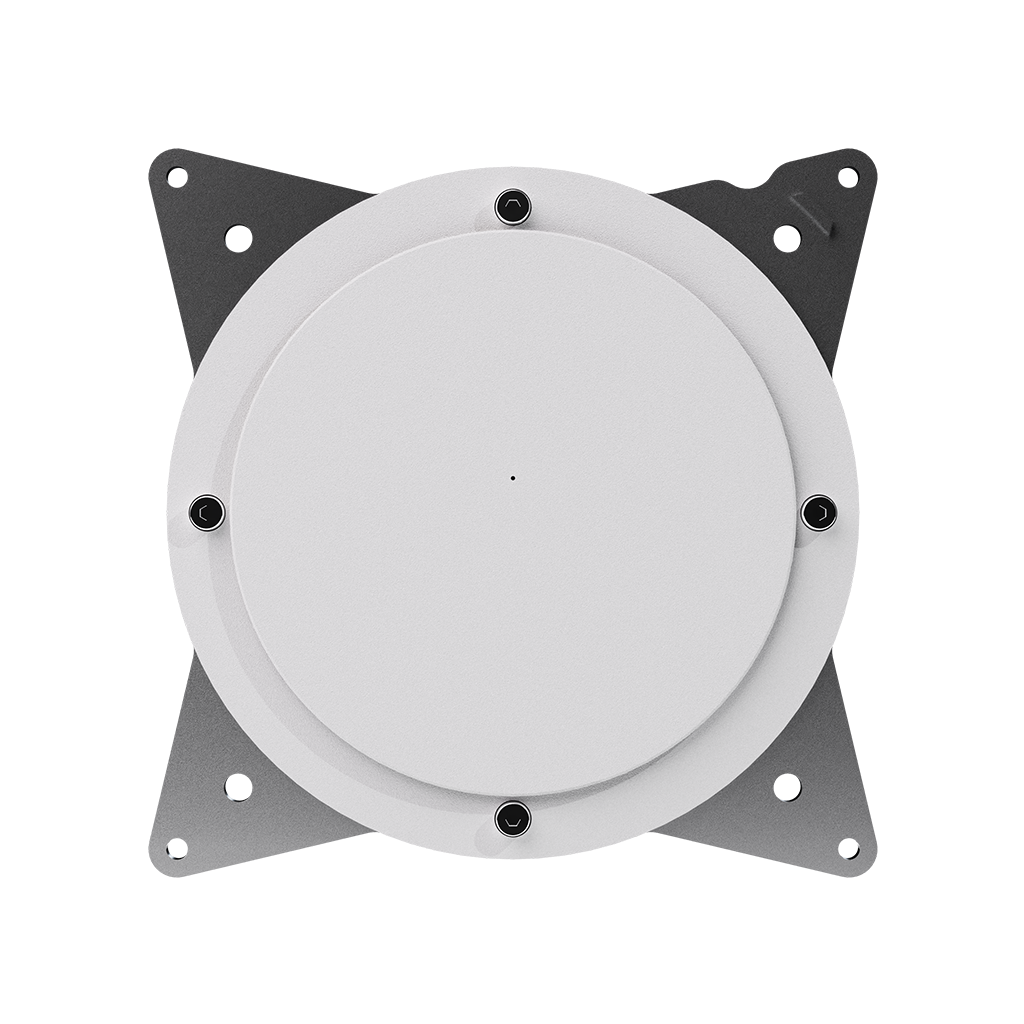
Choke ring design for minimal multipath
The concentric choke ring structure is the defining feature of this antenna. It suppresses multipath interference and surface wave propagation, ensuring a clean, stable radiation pattern across the full hemispherical coverage. This translates directly into accurate and reliable TT&C link performance — even on platforms where antenna placement is constrained.
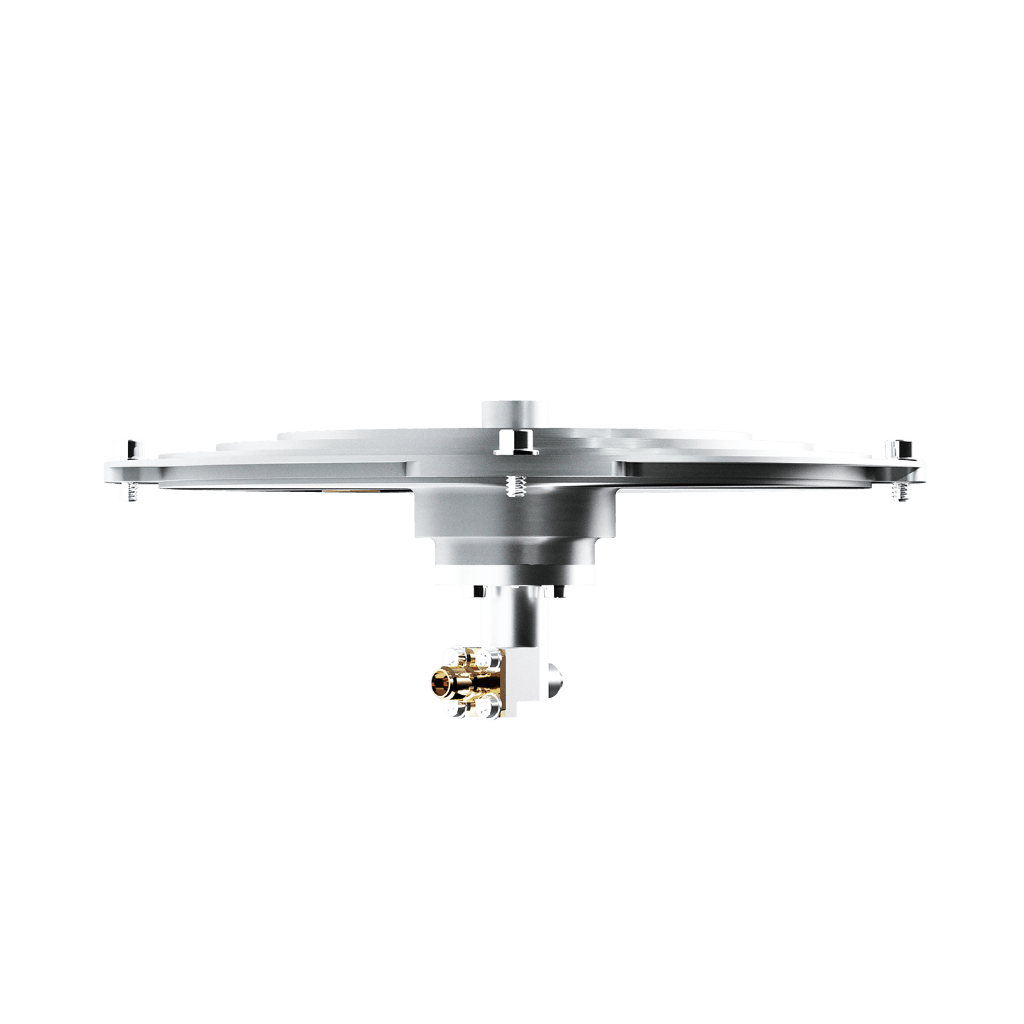
Full metal design for harsh environments
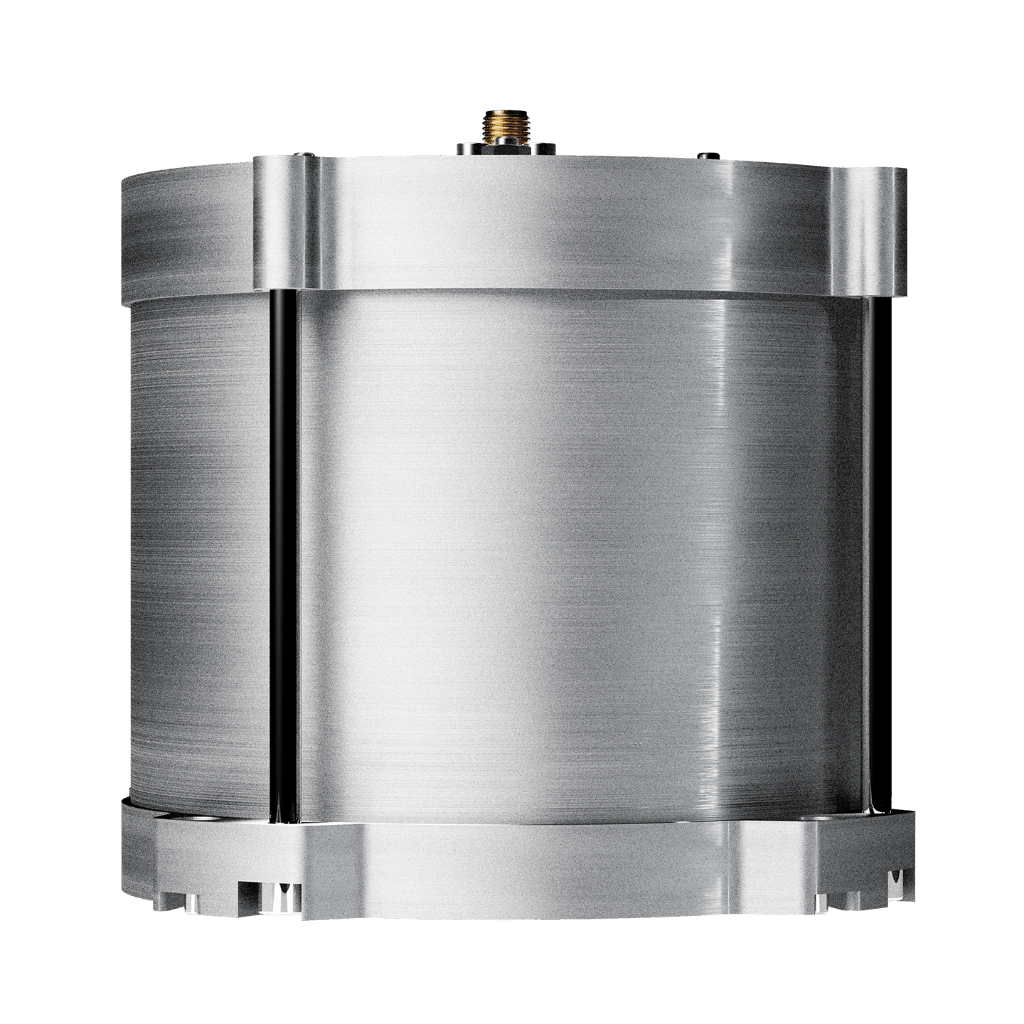
Unlike radome-protected designs, the Ka-Band TT&C Antenna uses a full metal structure inherently resistant to thermal extremes, radiation and electrostatic discharges. With a qualification temperature range of −120°C to +120°C and no floating electrical potentials within the antenna structure, it is designed to withstand the most demanding orbital environments without performance degradation.
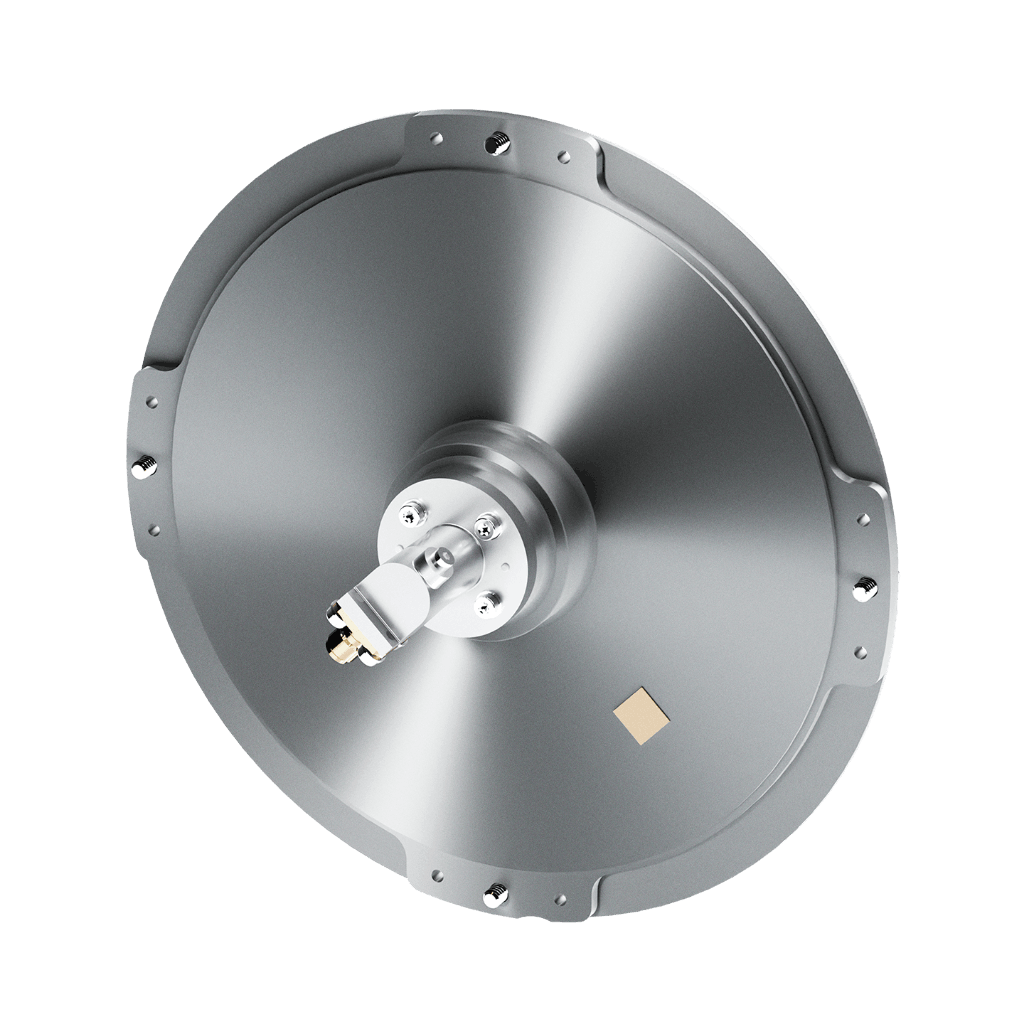
Two dedicated models, one system architecture
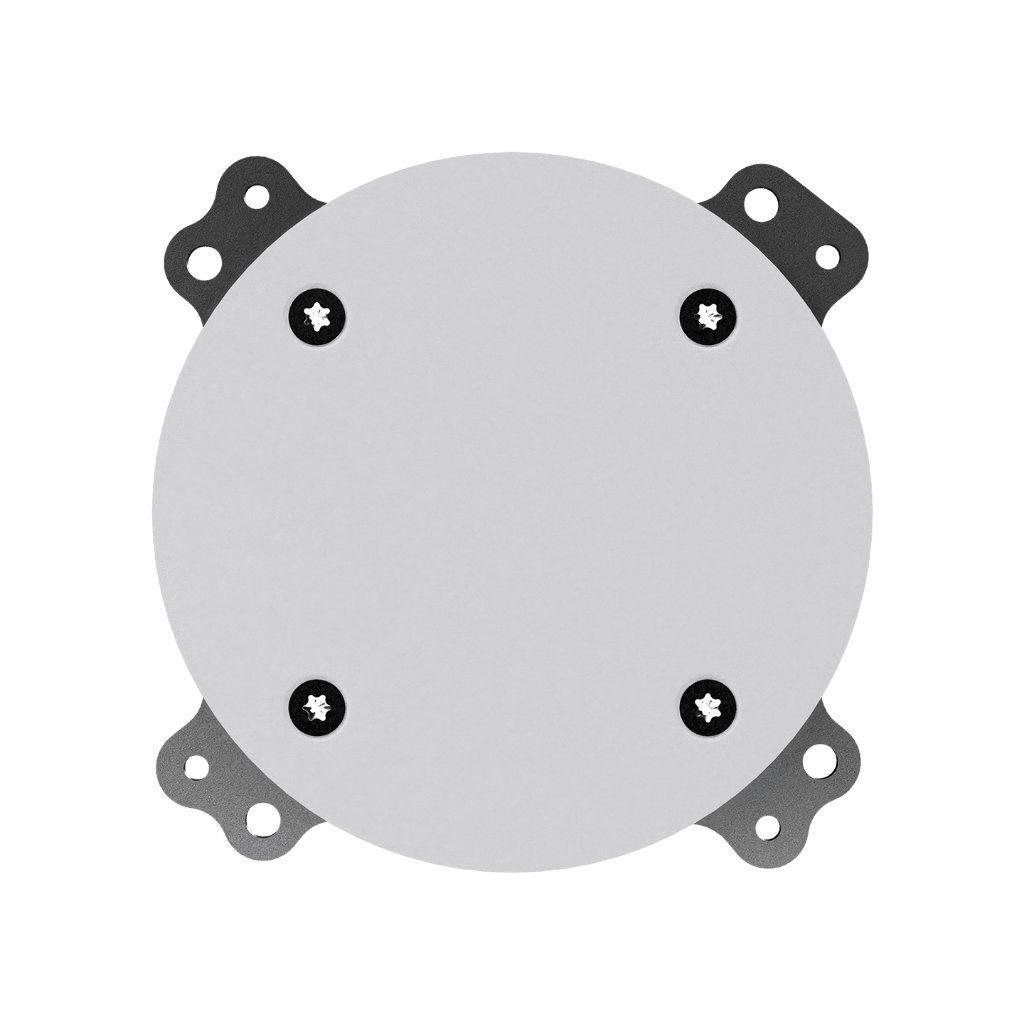
The Ka-Band TT&C Antenna is available as two distinct units — an Rx model (29.5–30 GHz, < 75 g) and a Tx model (19.7–20.2 GHz, < 140 g) — both fitting within a 1U CubeSat face. Each model can be provided with single or dual-circular polarization (RHCP/LHCP), and both are Test Hat compatible for seamless on-platform RF testing. A full-duplex version (17.7–20.2 GHz and 27.5-30.0 GHz, < 80 g) is also available on-demand. The latter provide orthogonal circular polarization between the two frequency channels, i.e., Tx and Rx.
High-performance Ka-Band TT&C for demanding missions
The Anywaves Ka-Band TT&C Antenna is a compact, reliable solution for telemetry, tracking and command operations in the Ka-band. Available in three dedicated models — Rx (29.5–30 GHz), Tx (19.7–20.2 GHz), and Rx/Tx (17.7–20.2 GHz and 27.5-30.0 GHz) — it provides hemispherical beam coverage (HPBW > 90°) with excellent axial ratio stability and a reflection coefficient better than −18 dB across the full frequency band.
Its choke ring design minimises multipath interference, while the full metal construction ensures resilience in the most demanding space environments. Supporting single or dual-circular polarization (RHCP/LHCP), scalable in frequency, and compatible with the Anywaves Test Hat, it offers the flexibility required by modern satellite platforms. Lightweight, ITAR Free, and supplied with full acceptance testing on flight models.

Complete EIDP
At the delivery of your antennas, you will receive a complete EIDP (End Item Data Package) including: RF acceptance test reports, ICD (Interface Control Document), Mechanical envelope, User Manual, Certificate of conformity.

In-Depth Engineering Support
During the full length of your antennas project, you’ll benefit from an in-depth and tailored support from our experienced engineers. They’ll answer all of your questions and ensure that our antennas meet your missions’ needs.

Further Testing Available On Demand
If needed, we can perform additional on-demand tests on your antennas to guarantee their performance in the specific environment and conditions of your spacecraft.

Specific Requests Analysis With Experts
In the case you need additional information and performance results, our experts can conduct complementary analysis based on your requirements (mechanical, thermal, radio-frequency performances on platform etc.).
You might also like

Ka-Band TT&C. Compact. Reliable. Ready to fly.
Tell us about your platform and mission profile. Our engineers will help you select the right Ka-Band TT&C antenna model and polarisation configuration for your requirements.
Questions & Answers
-
What is a Ka-Band TT&C antenna and why use Ka-Band for satellite communications?
Ka-Band (26.5–40 GHz) is increasingly used for TT&C on next-generation satellites because it offers significantly wider bandwidth than traditional S-Band or X-Band links, enabling higher data rates for telemetry and command. The Anywaves Ka-Band TT&C Antenna is designed specifically for the 19.7–20.2 GHz (Tx) and 29.5–30 GHz (Rx) sub-bands, which correspond to the standard ITU allocations for satellite Ka-band TT&C. It is particularly relevant for missions requiring high-throughput command uplink or telemetry downlink, or for operators building Ka-band-compatible spacecraft platforms.
-
What is the difference between the Rx and Tx models?
The Ka-Band TT&C Antenna is available in two separate, dedicated units. The Rx model operates in reception at 29.5–30 GHz, measures 108 × 108 × 44 mm and weighs less than 75 g. The Tx model operates in transmission at 19.7–20.2 GHz, measures 150 × 150 × 60 mm and weighs less than 140 g. Both models offer LHCP or RHCP polarisation, a hemispherical beam pattern with HPBW > 90°, and the same choke ring design. They can be used independently or as a pair for full duplex Ka-Band TT&C operations. A dedicated full-duplex Rx/Tx version with a single radiating aperture is available too.
-
What is a choke ring and what advantage does it provide?
A choke ring is a set of concentric metallic grooves surrounding the antenna aperture. By suppressing surface waves and multipath reflections — caused by signals bouncing off the spacecraft structure — the choke ring design produces a cleaner, more stable radiation pattern and improved axial ratio stability at wide elevation angles. For TT&C applications, this translates into more reliable link performance across the full visible arc of a ground station pass, particularly at low elevation angles where multipath effects are most pronounced.
-
Is the Ka-Band TT&C Antenna compatible with the Anywaves Test Hat?
Yes. Both the Rx and Tx models are Test Hat compatible, allowing RF functional testing of the antenna while it is integrated on the spacecraft, without requiring demounting. Anywaves offers a dedicated Test Hat for Ka-Band TT&C Antennas.
-
Can the antenna support dual-circular polarization?
Yes. In addition to single-polarization models (LHCP or RHCP), the Ka-Band TT&C Antenna can be provided in a dual-circular polarization configuration supporting both LHCP and RHCP simultaneously. This enables more flexible ground station compatibility and polarisation diversity to mitigate Faraday rotation effects.
-
How does the full metal design compare to a radome-protected antenna?
Unlike antennas with a polymer radome, the Anywaves Ka-Band TT&C Antenna uses a full metal structure. This provides inherent resistance to the thermal extremes of the space environment (−120°C to +120°C qualification temperature), radiation, and electrostatic discharges — without adding a separate protective component that could degrade RF performance. The antenna’s all-metal construction also ensures no floating electrical potentials within the structure, improving electromagnetic compatibility.
Ka-Band TT&C antenna: compact choke ring design for satellite telemetry and command
The Anywaves Ka-Band TT&C Antenna is a compact, full-metal choke ring antenna for telemetry, tracking and command operations in the Ka-band. Available in two models — Rx (29.5–30 GHz) and Tx (19.7–20.2 GHz) — it provides hemispherical coverage with a Half Power Beam Width greater than 90° and a realized gain above 5 dBi at boresight (Rx) and 3 dBi (Tx). The choke ring design minimises multipath interference and ensures axial ratio stability across a wide angular range. Provided with single or dual-circular polarization (LHCP/RHCP) and a SMA 2.9 female connector.
Both models fit within a 1U CubeSat face (Rx: 108 × 108 × 44 mm, < 75 g | Tx: 150 × 150 × 60 mm, < 140 g), and are Test Hat compatible for on-platform RF verification. The full metal structure withstands a qualification temperature range of −120°C to +120°C, with no floating electrical potentials. Full acceptance testing (RF, mechanical and thermal) is included on flight models. ITAR Free. Scalable in frequency to meet specific mission requirements.
