Compact Wideband Antennas
Typical design targets
S-Band Version: Maximum bandwidth. Minimum footprint.
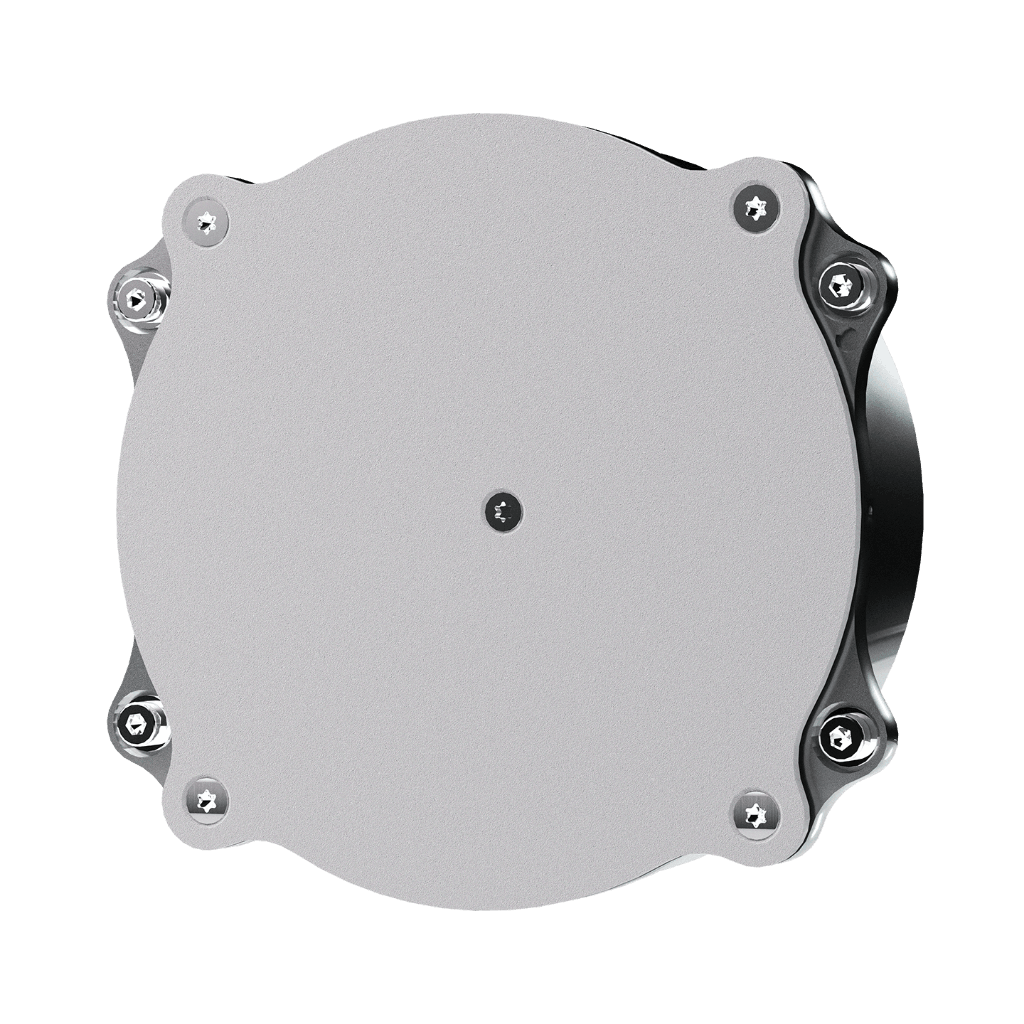
Up to 100% fractional bandwidth — the widest in the Anywaves range
A fractional bandwidth of up to 100% means the antenna’s bandwidth equals its centre frequency —from as low as UHF (around 300 MHz) up to S-band (around 4 GHz)—within a single aperture. This represents exceptionally wide coverage for a compact, space-qualified antenna: it enables a satellite to capture signals from multiple services simultaneously, without requiring separate antennas for each frequency band. For spectrum monitoring missions, this provides full situational awareness across the target spectrum from a compact-sized payload. For GNSS augmentation, it enables simultaneous reception of all GNSS bands, including L-band correction signals
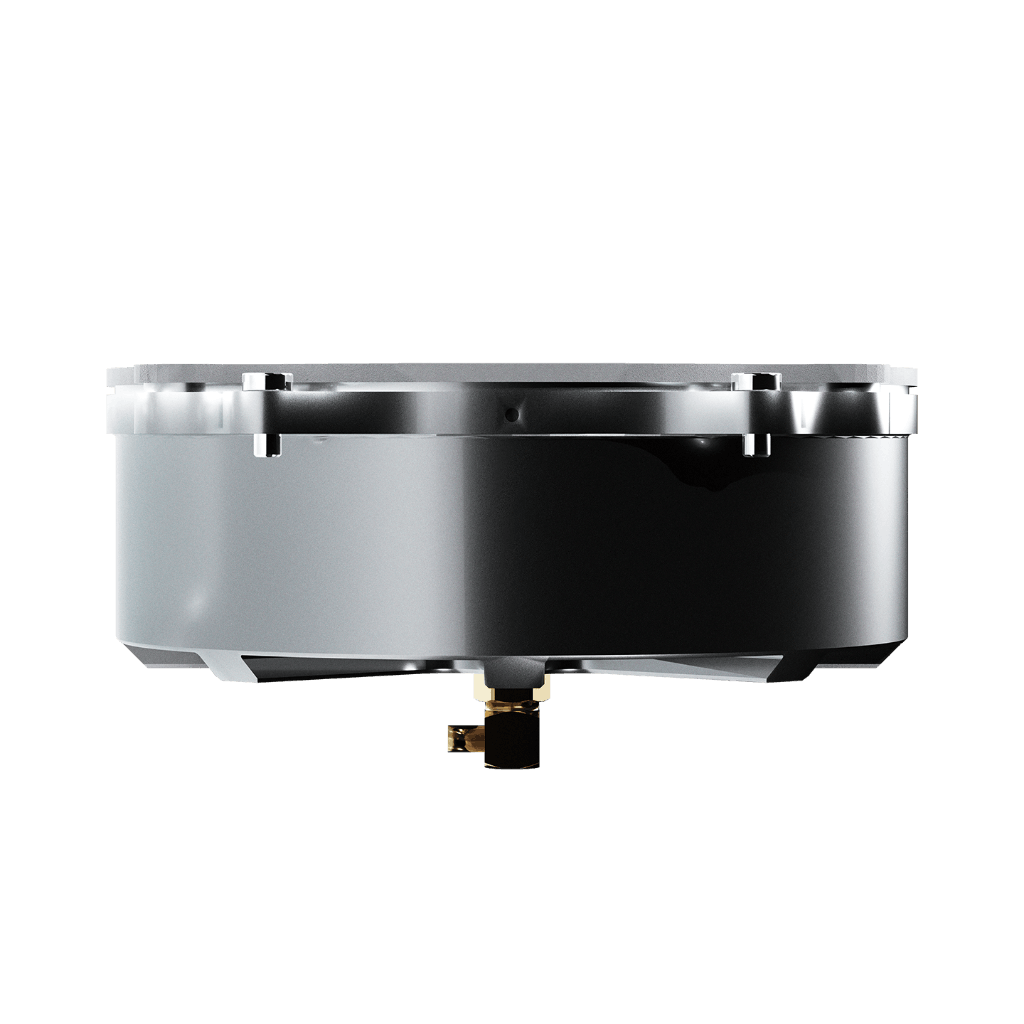
< 1U footprint for the S-Band version: wide-sky coverage in a CubeSat-compatible size
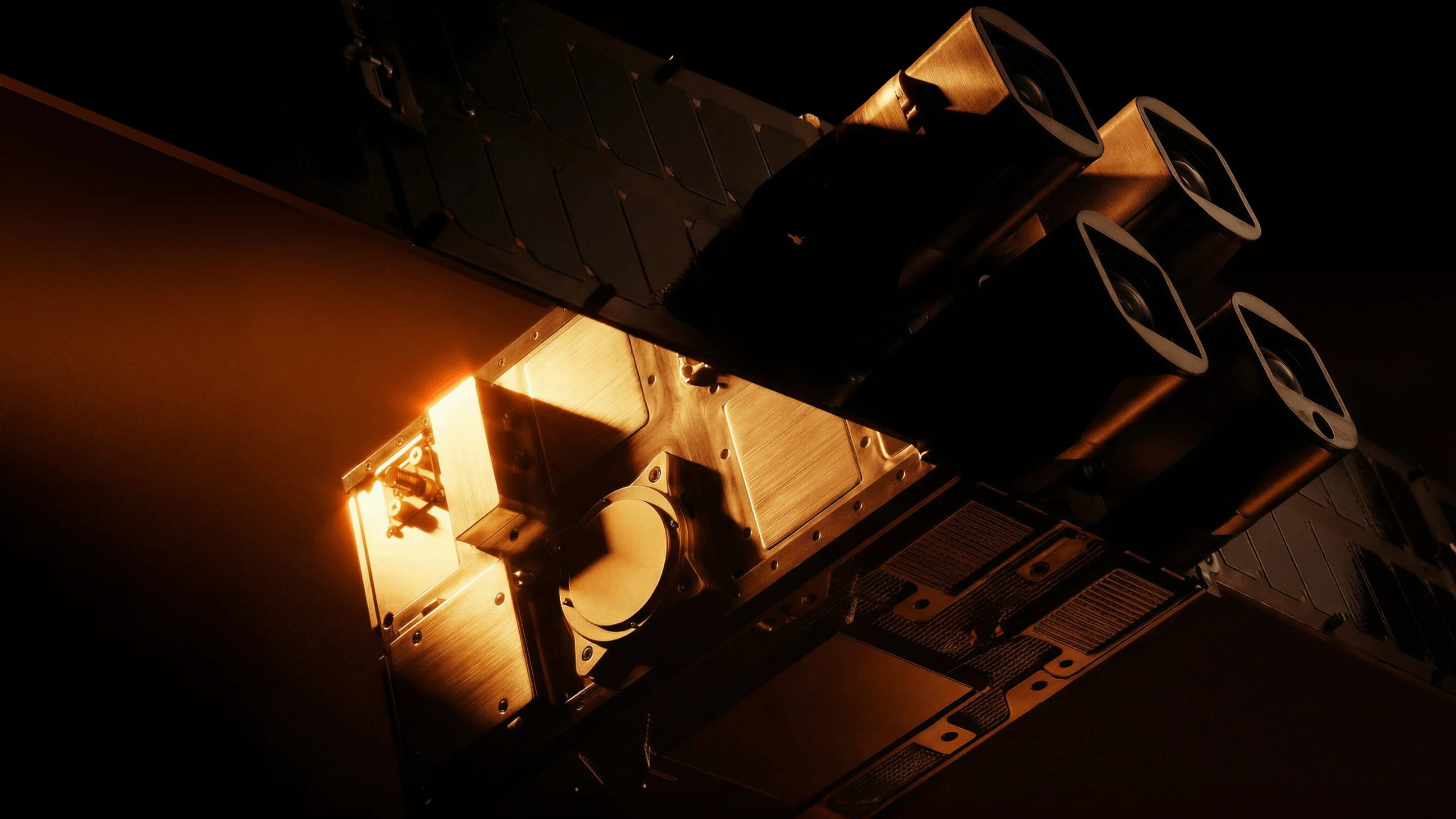
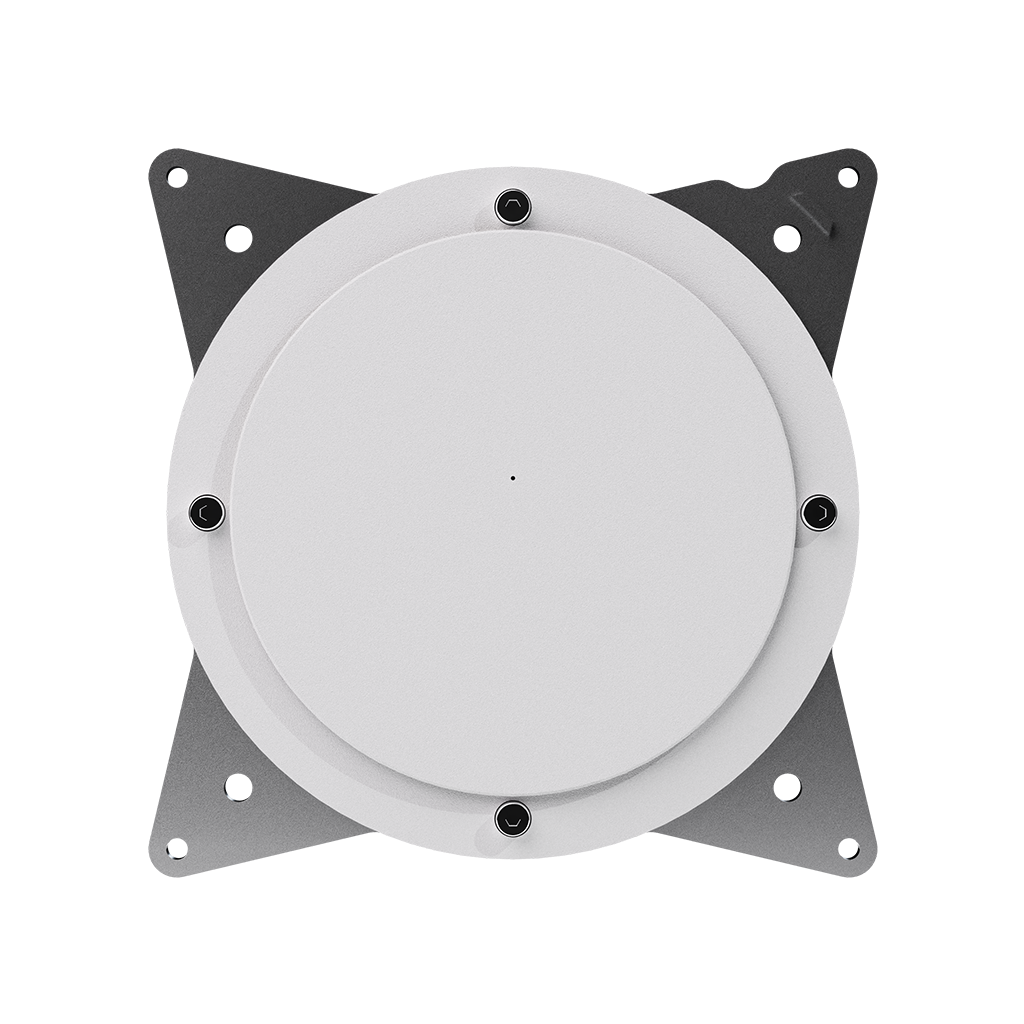
Despite covering up to a decade of frequency spectrum, the Compact Wideband Antenna in its S-band version fits within a <1U footprint — the standard single-unit face of a CubeSat. The cavity-backed design concentrates all the RF-active elements within a compact, integrated structure that integrates directly on a satellite panel with no external deployable elements. Its stable radiation pattern in circular polarization ensures consistent hemispherical sky coverage across the full bandwidth, essential for spectrum monitoring and GNSS augmentation applications where the signal of interest can arrive from any elevation angle.
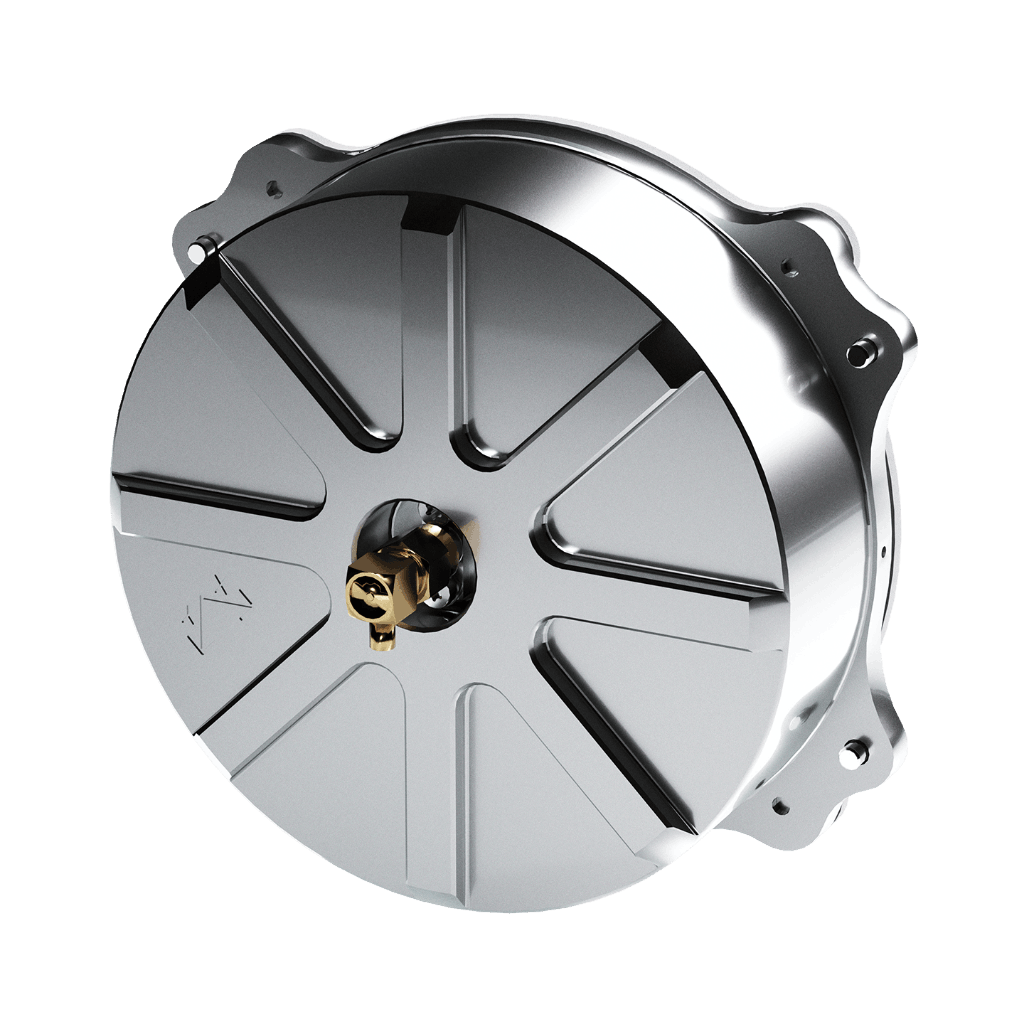
Radome protection — space-proven materials and processes
The antenna is protected by a radome using space-qualified materials and processes, providing thermoelastic robustness across the thermal cycles of LEO orbit. Its qualification campaign covers vibration testing, shock testing, and thermal vacuum cycling — ensuring the antenna maintains its wideband radiation pattern and gain stability across the full mission lifetime. Acceptance tests are performed on all flight models and customised according to the customer’s specific requirements.
Wideband spectrum capture in a compact, space-proven package
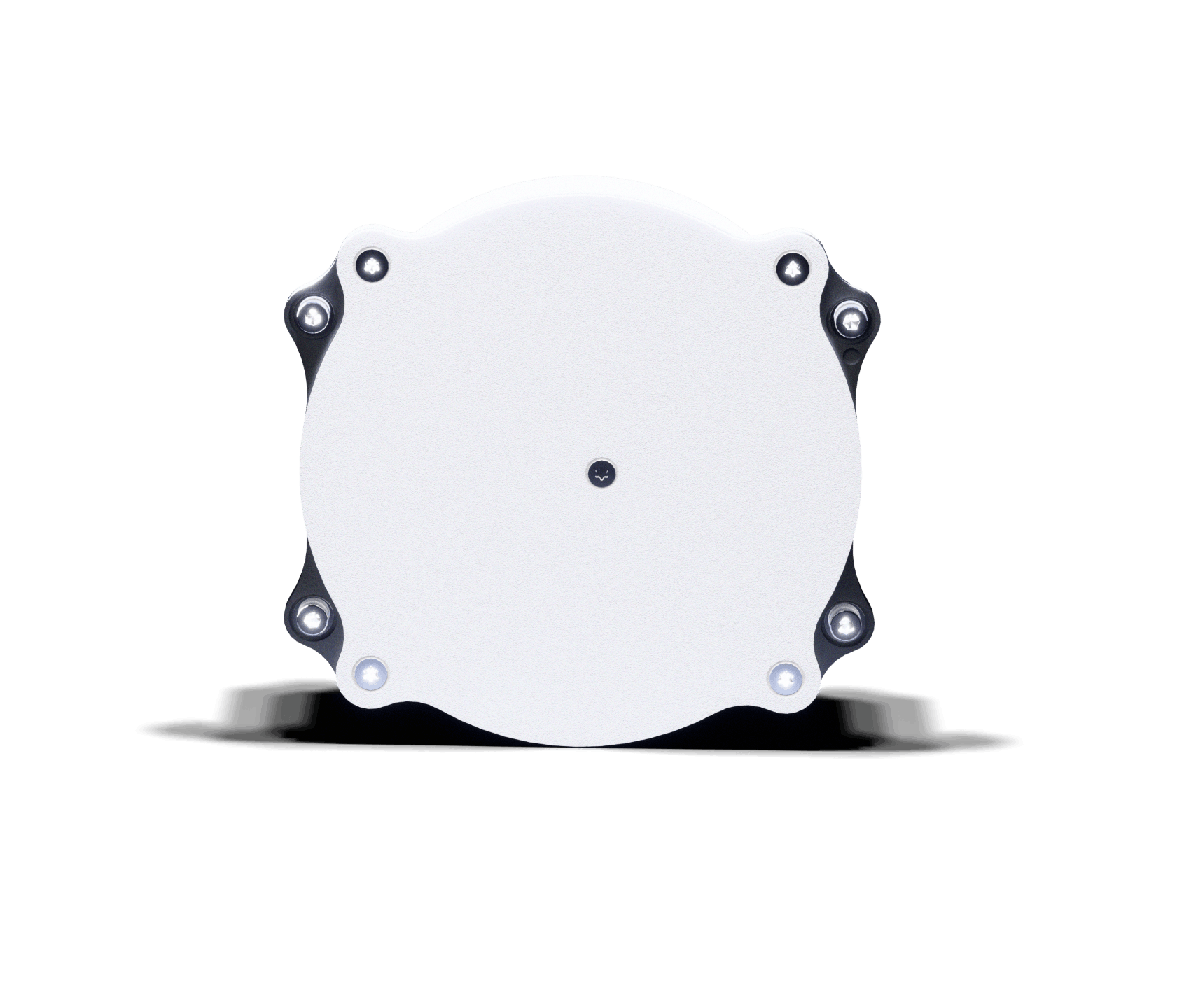
The Anywaves Compact Wideband Antennas are custom-designed payload antennas for spectrum monitoring, Space Situational Awareness (SSA), GNSS augmentation and spectrum surveillance applications from LEO satellites. With a fractional bandwidth of up to 100% — covering UHF to S-band — they provide the widest signal capture capability in the Anywaves product range, enabling a satellite to monitor the full target spectrum without multiple antennas or frequency-band constraints.
Based on a cavity-backed architecture with a stable circular polarization radiation pattern, they deliver consistent hemispherical sky coverage across the full bandwidth. TRL 9, built with flight-proven space-qualified materials and processes. Acceptance tests included on all flight models. All parameters — frequency sub-band, polarization, size — are defined jointly with the customer and tailored to the mission. ITAR Free.

Requirement Definition
At Anywaves, we specialise in delivering custom-made antennas tailored to meet your unique requirements. Our expertise allows us to understand your specific needs and translate them into antenna specifications. We work closely with you to identify key parameters such as frequency bands, gain, beamwidth, mechanical constraints, and environmental considerations. Our team of experienced engineers collaborates with you throughout the process, ensuring that the antenna design aligns precisely with your application’s demands.

Project Management
Our experienced space project managers are skilled in coordinating all aspects of your custom-made antenna project, from initial concept to final delivery. With meticulous planning, effective communication, and diligent resource allocation, we ensure that your project stays on track through key milestones (PDR, CDR, TRR, TRB…). Our project management expertise enables us to navigate complex challenges, mitigate risks, and provide you with regular updates on project progress.

Technical Expertise
Our team of skilled engineers has extensive experience in antenna design and development, as well as in the space and defence industries. We leverage the latest tools and technologies to develop innovative antenna solutions that meet even the most complex challenges. With our technical expertise, we optimise key parameters such as gain, bandwidth, radiation pattern, and impedance matching to deliver antennas that excel in your specific application, following an extensive testing process to mitigate risks throughout the project.

Extensive Documentation
In addition to our standard EIDP package, we deliver throughout the project all the design justification you may need: RF, mechanical, thermal and radiation analyses; test plans; test reports. We make sure to deliver documentation that adds value to your project and guarantees that your antenna is compliant with your requirements.




Tell us your needs, we’ll design the antenna.
Tell us about your spectrum monitoring or GNSS augmentation requirements. Our engineers will design a compact wideband antenna to cover your target frequency range in a <1U footprint.
Questions & Answers
-
What is fractional bandwidth and why does 100% matter for spectrum monitoring?
Fractional bandwidth is the ratio of an antenna’s usable bandwidth to its centre frequency, expressed as a percentage. A 100% fractional bandwidth means the antenna’s bandwidth equals its centre frequency — for example, an antenna centred at 1 GHz with 100% FBW covers from 500 MHz to 1.5 GHz. In practice, Anywaves’ Compact Wideband Antennas can cover the full range from UHF (around 300 MHz) to S-band (around 4 GHz) within a single aperture. For spectrum monitoring applications, this means a satellite can capture and characterise RF activity across multiple frequency allocations — satellite services, cellular uplinks, navigation signals, search and rescue beacons — simultaneously, without needing separate antennas for each service.
-
What applications are these antennas designed for?
Anywaves’ Compact Wideband Antennas are designed for payload applications that require wide-spectrum signal reception from LEO. Primary applications include spectrum surveillance (monitoring compliance with frequency allocations across the target spectrum); Space Situational Awareness (SSA), where the antenna captures signals from orbiting objects for debris monitoring or collision avoidance; GNSS augmentation, where reception of multiple GNSS signals simultaneously — including L-band correction signals — enables enhanced positioning accuracy; and scientific or intelligence applications that require wideband RF characterisation of ground-based or space-based emitters. These are custom products: the exact frequency sub-band, polarization and size are defined per mission.
-
How does the Compact Wideband Antenna differ from the GNSS All-Bands Antenna?
Both products cover a wide frequency range in a compact footprint, but they are designed for fundamentally different applications. The GNSS All-Bands Antenna is optimised for precise navigation: it covers the 1.16–1.61 GHz GNSS band specifically, with a carefully controlled phase center (variation <4.7 mm) and gain characteristics tuned for satellite orbit determination and timing. The Compact Wideband Antenna sacrifices phase center precision and band-specific optimisation in favour of extreme bandwidth: it covers UHF to S-band (potentially 10× wider) with a hemispherical pattern suited to signal capture from any direction. The right choice depends entirely on whether the mission needs precise navigation (GNSS All-Bands) or wide-spectrum signal capture (Compact Wideband).
-
What does the cavity-backed design mean for performance?
A cavity-backed antenna uses a metallic enclosure (cavity) behind the radiating element to control the radiation pattern and prevent radiation towards the satellite structure. This has two important effects. First, it confines the radiation to the forward hemisphere (towards space), which is the required coverage for spectrum monitoring of terrestrial or space-based emitters. Second, it provides isolation between the antenna’s RF performance and the satellite’s metallic structure, making the radiation pattern predictable and stable regardless of platform geometry. The cavity also contributes to the antenna’s mechanical robustness, providing a rigid protective enclosure that helps the antenna survive the vibration and shock loads of launch without performance degradation.
-
How does the Compact Wideband Antenna compare to a traditional monopole or dipole for wideband applications?
Monopole and dipole antennas can achieve very wide bandwidths but have several disadvantages for space applications. They have a bidirectional or omnidirectional pattern (radiating towards the satellite body as well as towards space), which can cause structural interference and multipath effects. They are physically fragile — protruding elements that are vulnerable to vibration and deployment failures. And they cannot be easily integrated into a flat panel in a <1U footprint. Anywaves’ Compact Wideband Antenna addresses all three issues: its cavity-backed architecture provides a unidirectional hemispherical pattern, its integrated flat form factor is mechanically robust and panel-compatible, and its size is kept within <1U for the S-Band version. The trade-off is a slightly narrower coverage angle compared to an omnidirectional antenna, but for LEO spectrum monitoring the target signals are predominantly nadir-looking or side-looking.
Compact wideband antenna: UHF to S-band spectrum monitoring from LEO
Anywaves’ Compact Wideband Antennas are custom-designed payload antennas for spectrum monitoring, Space Situational Awareness (SSA), GNSS augmentation and spectrum surveillance applications from LEO satellites. Based on a cavity-backed architecture, they achieve up to 100% fractional bandwidth across UHF to S-band (≈300 MHz to 4 GHz) with a stable circular polarization radiation pattern and a realised gain below 3 dBi at boresight — providing hemispherical sky coverage across the full spectrum within a <1U footprint for the S-Band version. TRL 9, built with flight-proven space-qualified materials and processes.
The single-circular polarization hemispherical pattern ensures consistent signal capture from any elevation angle, essential for spectrum monitoring satellites in LEO. All parameters (frequency sub-band, polarization, exact envelope dimensions) are defined jointly with the customer and tailored to each mission. Qualification campaign includes vibration testing, shock testing, and thermal vacuum cycling. Acceptance tests included on all flight models. ITAR Free.
