GNSS L1/E1 Bands Antenna
Technical specifications
Precise L1/E1 positioning in a compact footprint.
> 6.5 dBi at boresight — highest gain in the Anywaves L1/E1 range
The GNSS L1/E1 Bands Antenna delivers a realized gain exceeding 6.5 dBi at 1 575.42 MHz (GPS L1 / Galileo E1), with more than 0 dBi maintained at ±60° elevation — providing solid hemispherical coverage in the upper hemisphere. This high gain level for a single-band GNSS antenna maximises the signal-to-noise ratio at the receiver input and improves positioning accuracy, particularly in low-inclination or maneuvering LEO orbits.
Phase center variation <1 mm — precision navigation at L1/E1
Phase center position variation is held within a sphere of radius less than 1 mm across the full GPS L1 / Galileo E1 band, with elevation-driven variation below 0.4 mm within a ±60° field of view. For missions where the on-board GNSS receiver is used for precise orbit determination or time-transfer, this phase center stability — better than that of the GNSS All-Bands Antenna in the individual sub-band — translates directly into improved navigation accuracy at the L1/E1 frequency.
PEEK radome with anti-ESD coating — qualified for harsh LEO environments
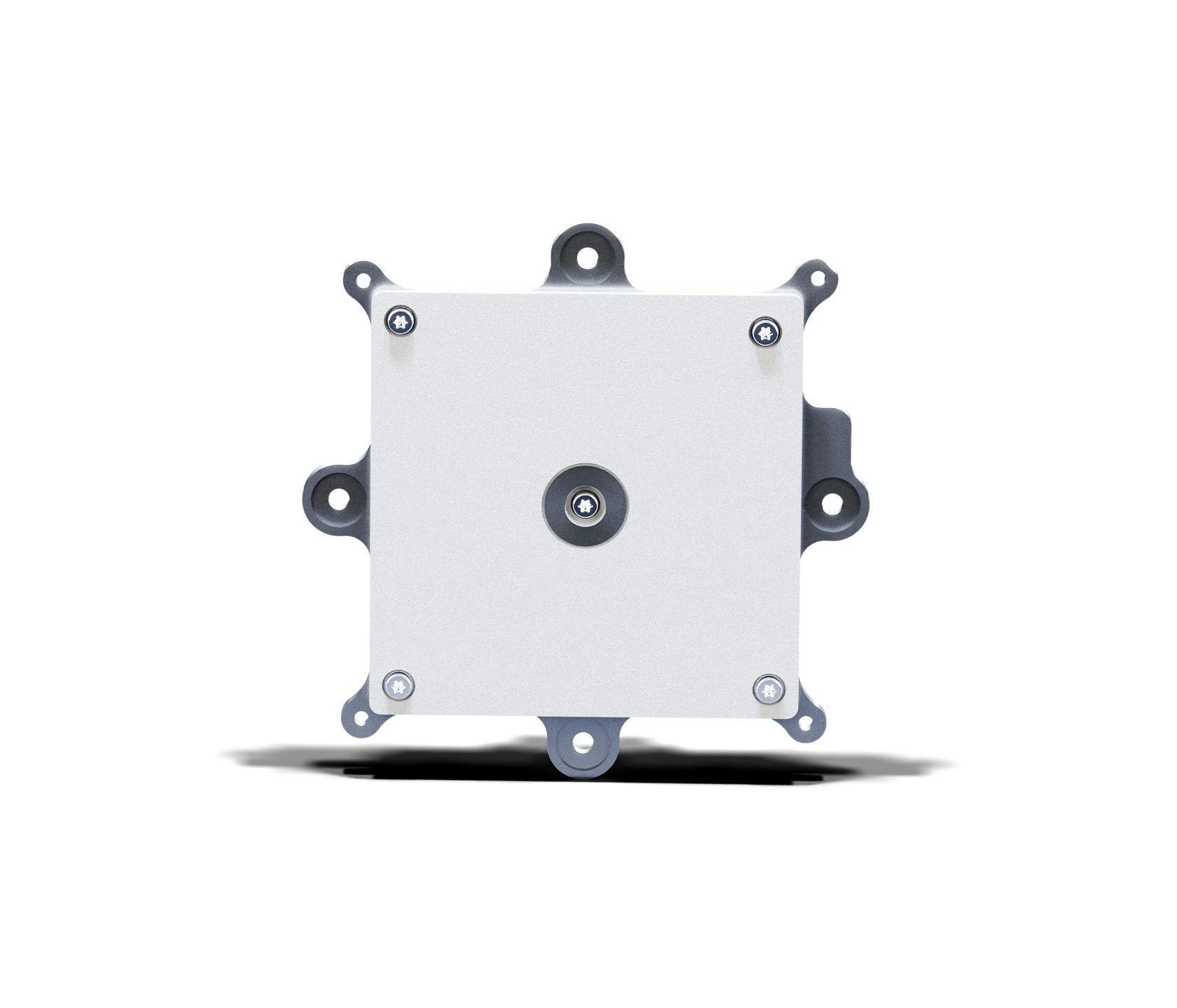
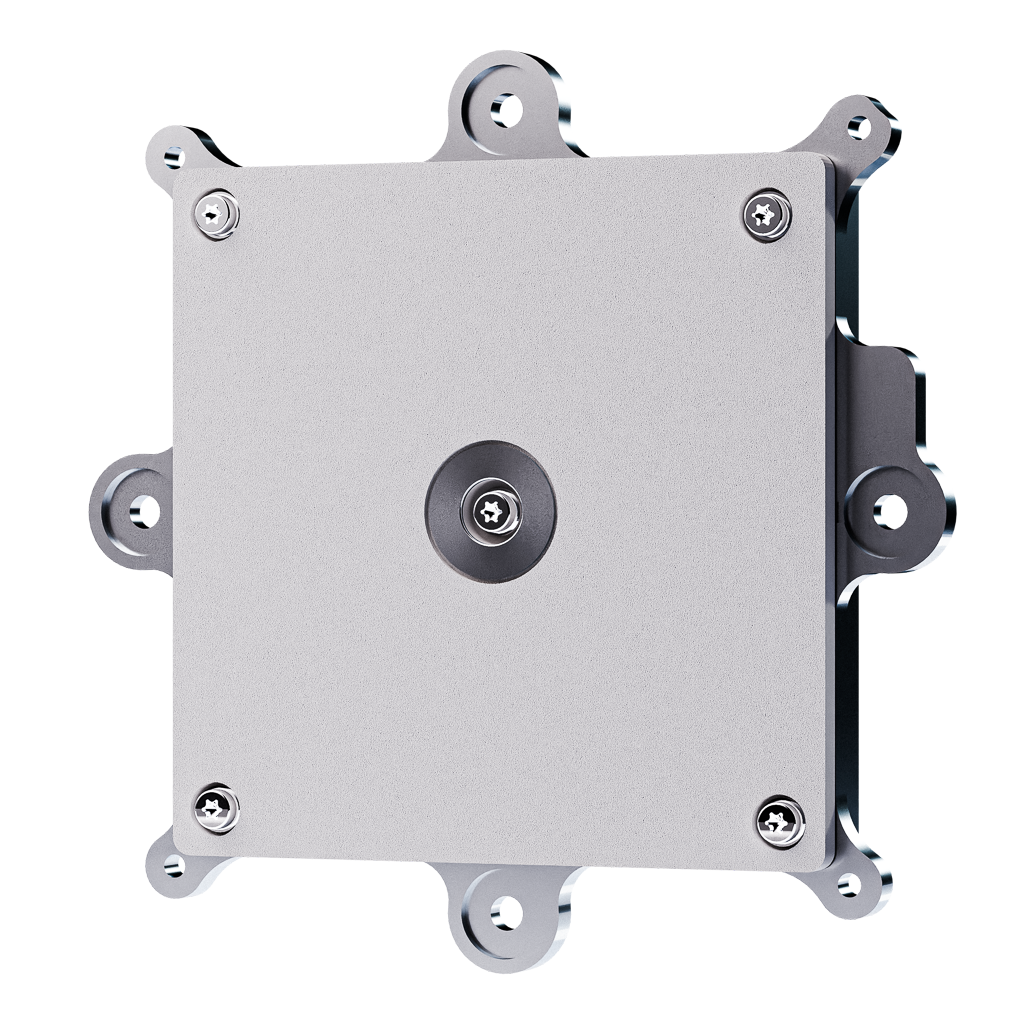
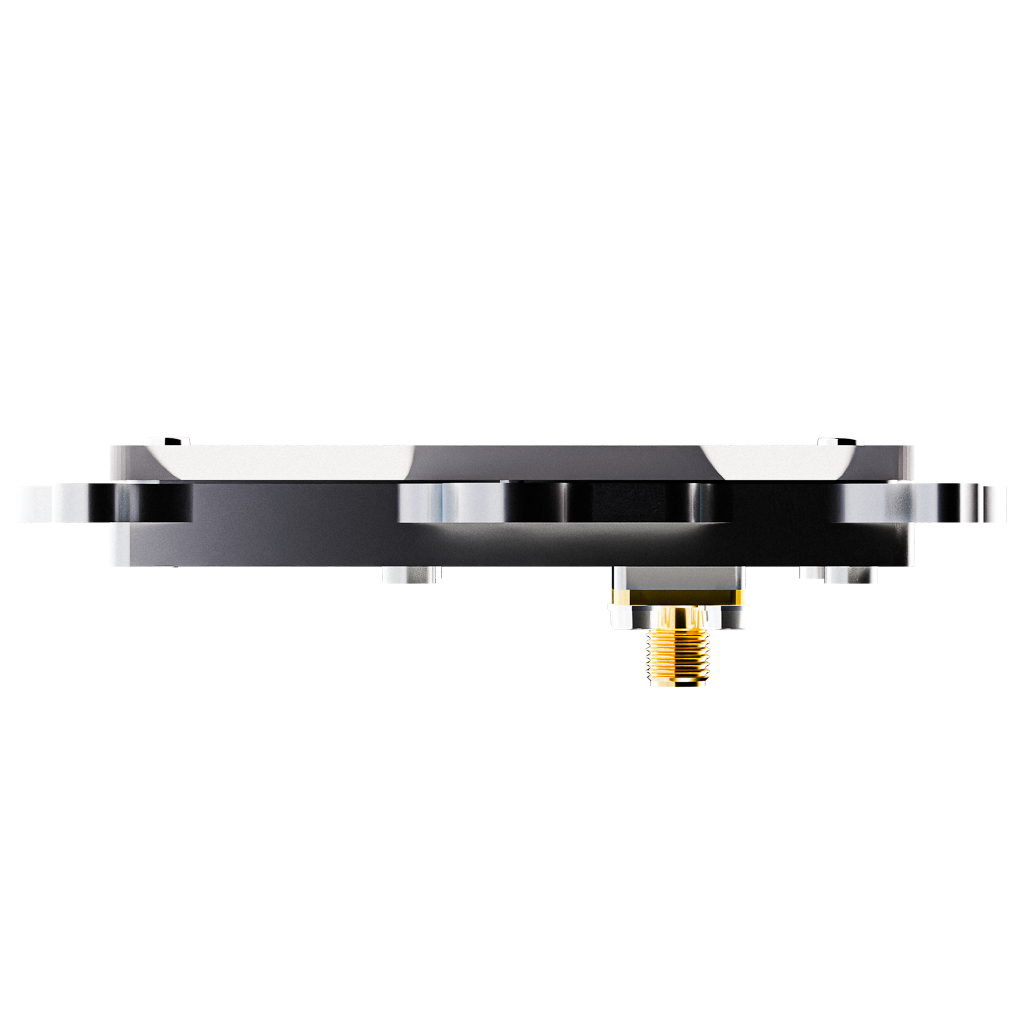
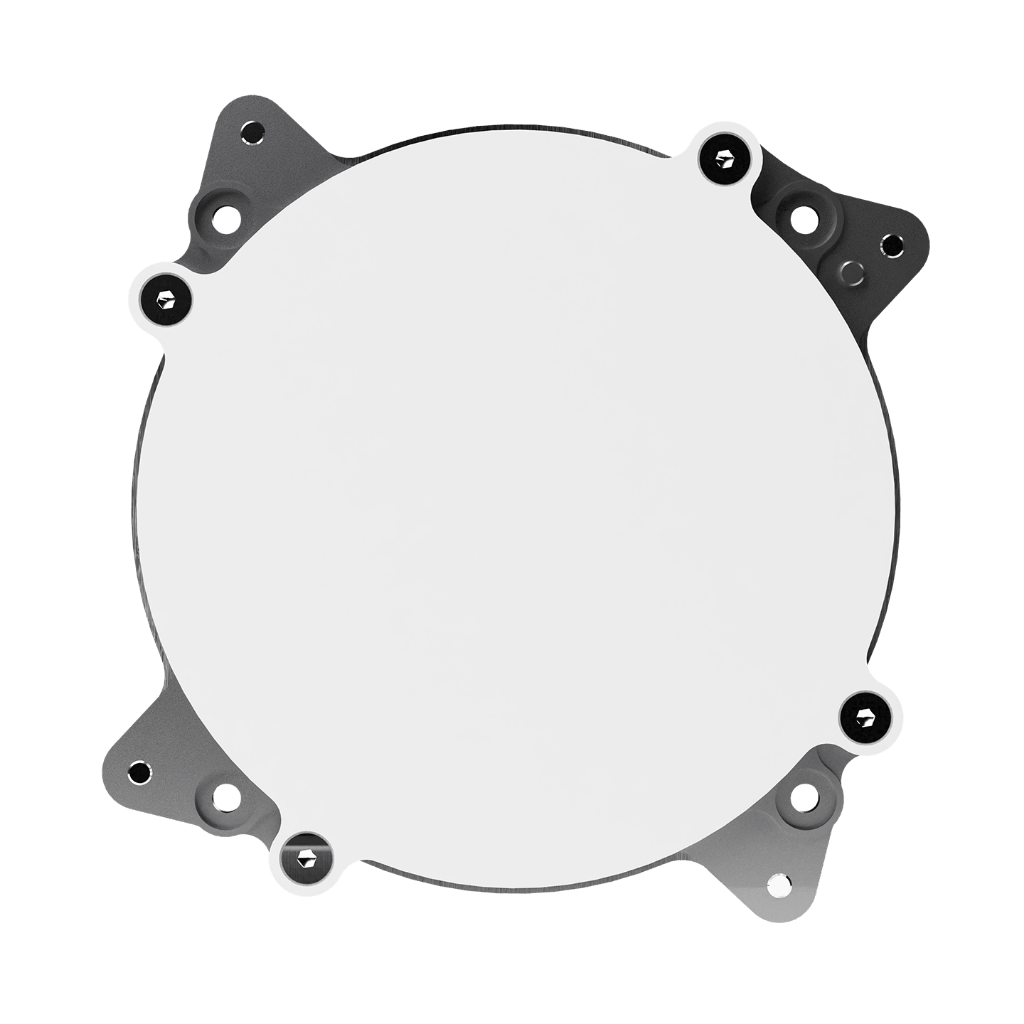
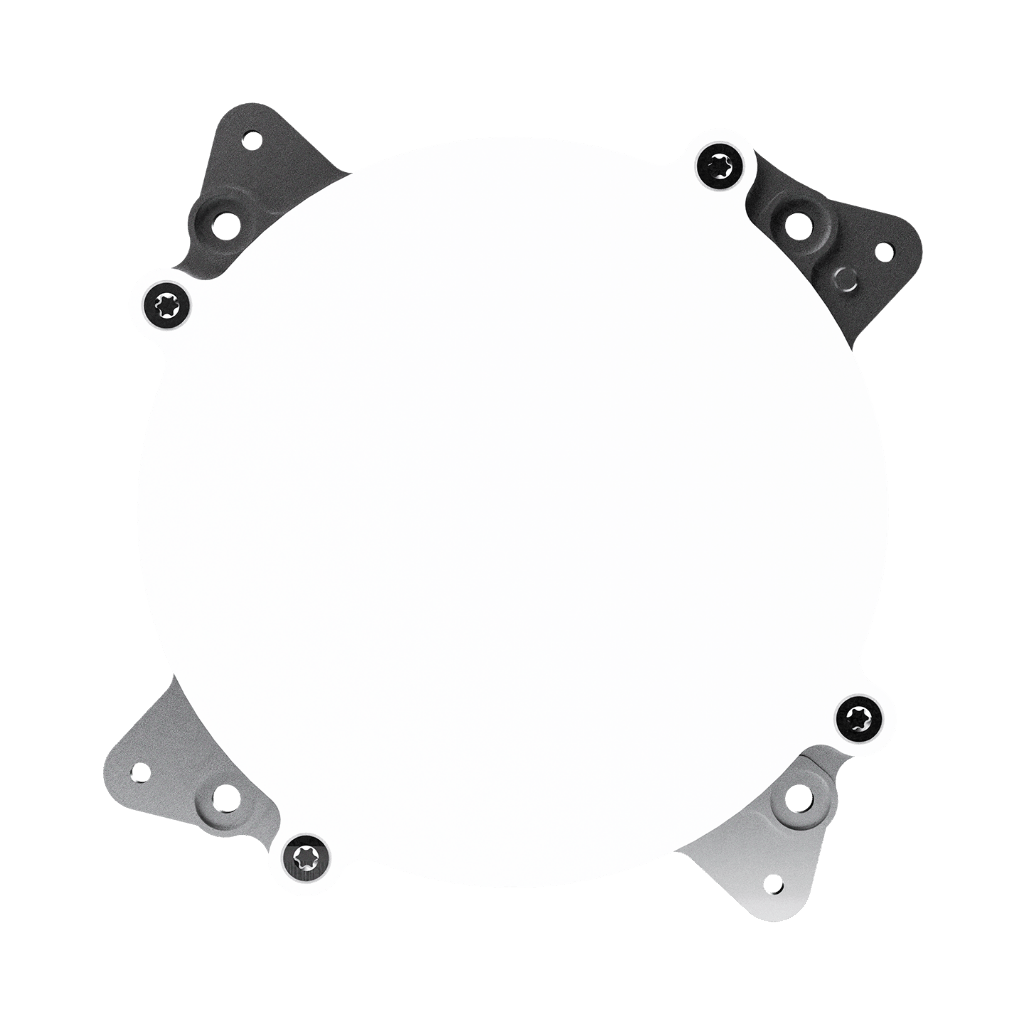
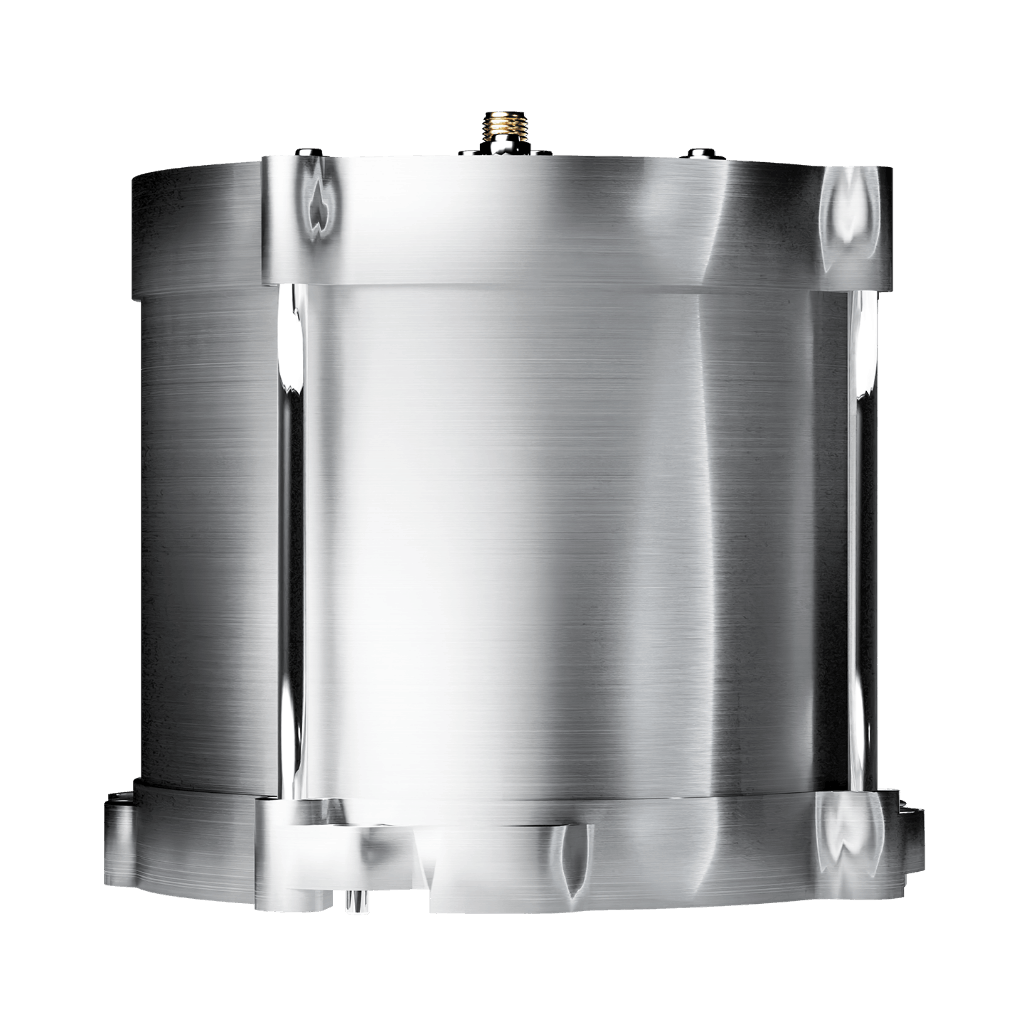
The antenna is protected by a PEEK radome coated with SG121FD white paint on flight models, providing thermal resistance across a qualification range of −120°C to +120°C and full protection against electrostatic discharges. At 96.6 × 96.6 mm and 103 g, it integrates directly onto any LEO satellite panel in a <1U footprint, with a protruding height of less than 8 mm. Full acceptance testing (RF, mechanical and thermal) is included on flight models.
High-gain L1/E1 navigation antenna for precise LEO positioning
The Anywaves GNSS L1/E1 Bands Antenna is the latest-generation single-band navigation antenna from Anywaves, designed for LEO platforms requiring high-accuracy GPS L1 and Galileo E1 positioning. With a realized gain exceeding 6.5 dBi at boresight and a phase center variation within a sphere of radius less than 1 mm across the full band, it delivers the signal quality and positioning precision required for precise orbit determination and timing applications.
Its compact 96.6 × 96.6 mm footprint, 103 g mass and protruding height of less than 8 mm make it easy to integrate on any LEO satellite panel. RHCP polarization, reflection coefficient better than −18 dB, axial ratio below 1 dB at boresight. PEEK radome with anti-ESD coating, qualification temperature −120°C to +120°C. Compatible with the Anywaves Test Hat for GNSS Antennas. Full acceptance testing on flight models. ITAR Free.

Complete EIDP
At the delivery of your antennas, you will receive a complete EIDP (End Item Data Package) including: RF acceptance test reports, ICD (Interface Control Document), Mechanical envelope, User Manual, Certificate of conformity.

In-Depth Engineering Support
During the full length of your antennas project, you’ll benefit from an in-depth and tailored support from our experienced engineers. They’ll answer all of your questions and ensure that our antennas meet your missions’ needs.

Further Testing Available On Demand
If needed, we can perform additional on-demand tests on your antennas to guarantee their performance in the specific environment and conditions of your spacecraft.

Specific Requests Analysis With Experts
In the case you need additional information and performance results, our experts can conduct complementary analysis based on your requirements (mechanical, thermal, radio-frequency performance on platform etc.).

Precise L1/E1 positioning. Compact. Ready to fly.
Tell us about your navigation requirements and platform constraints. Our engineers will help you integrate the GNSS L1/E1 Bands Antenna for maximum positioning accuracy.
Questions & Answers
-
What is the difference between the GNSS L1/E1 Bands Antenna and the GNSS All-Bands Antenna?
The GNSS All-Bands Antenna covers the complete 1.16–1.61 GHz range across all GNSS constellations simultaneously — GPS L1/L2/L5, Galileo E1/E5a/E5b/E6, GLONASS and BeiDou. The GNSS L1/E1 Bands Antenna focuses exclusively on the GPS L1 and Galileo E1 band (1 563–1 587 MHz) and we welcome on-demand delta-design to comply with INMARSAT L-band (1 525–1 559 MHz) requirements. The trade-off is performance vs coverage: by optimising the antenna for a single frequency band, the L1/E1 version achieves a higher realised gain (>6.5 dBi vs >0 dBi at boresight) and a tighter phase center sphere (<1 mm vs <4.7 mm across all bands). It is the right choice for missions where L1/E1 positioning accuracy is the priority and multi-constellation, multi-frequency reception is not required.
-
Why is GPS L1 / Galileo E1 the most widely used GNSS frequency for satellite navigation?
The L1/E1 band centred at 1 575.42 MHz is the primary civil signal broadcast by both GPS (L1 C/A, L1C) and Galileo (E1 OS). It is the most widely supported frequency across commercial GNSS receivers, ground network infrastructure and satellite navigation chipsets. For LEO satellite applications, single-frequency L1/E1 GNSS is sufficient for standard orbit determination and timing, where the ionospheric correction error is managed through modelling rather than dual-frequency measurement. It is also the lowest-cost and simplest implementation for missions that do not require the sub-centimetre accuracy achievable with dual-frequency or multi-constellation processing. Finally, this design can be easily adapted to meet the INMARSAT L-band (1 525–1 559 MHz) requirements as it can be also used in Tx mode.
-
What does phase center variation mean and why is it particularly important here?
The phase center is the point from which the GNSS signal appears to originate inside the antenna. Any variation of this point with frequency or elevation angle introduces a systematic positioning error proportional to that variation. The GNSS L1/E1 Bands Antenna holds phase center position variation within a sphere of radius less than 1 mm across the full GPS L1 / Galileo E1 band, and keeps elevation-driven variation below 0.4 mm within a ±60° field of view. This very tight phase center stability — significantly better than a broadband all-constellation antenna — is a key advantage for precise orbit determination applications, where systematic antenna errors translate directly into orbit accuracy.
-
Can I upgrade from the GNSS L1/E1 Bands Antenna to the GNSS All-Bands Antenna later?
Yes, in principle. Both antennas share the same 96.6 × 96.6 mm footprint and RF interface
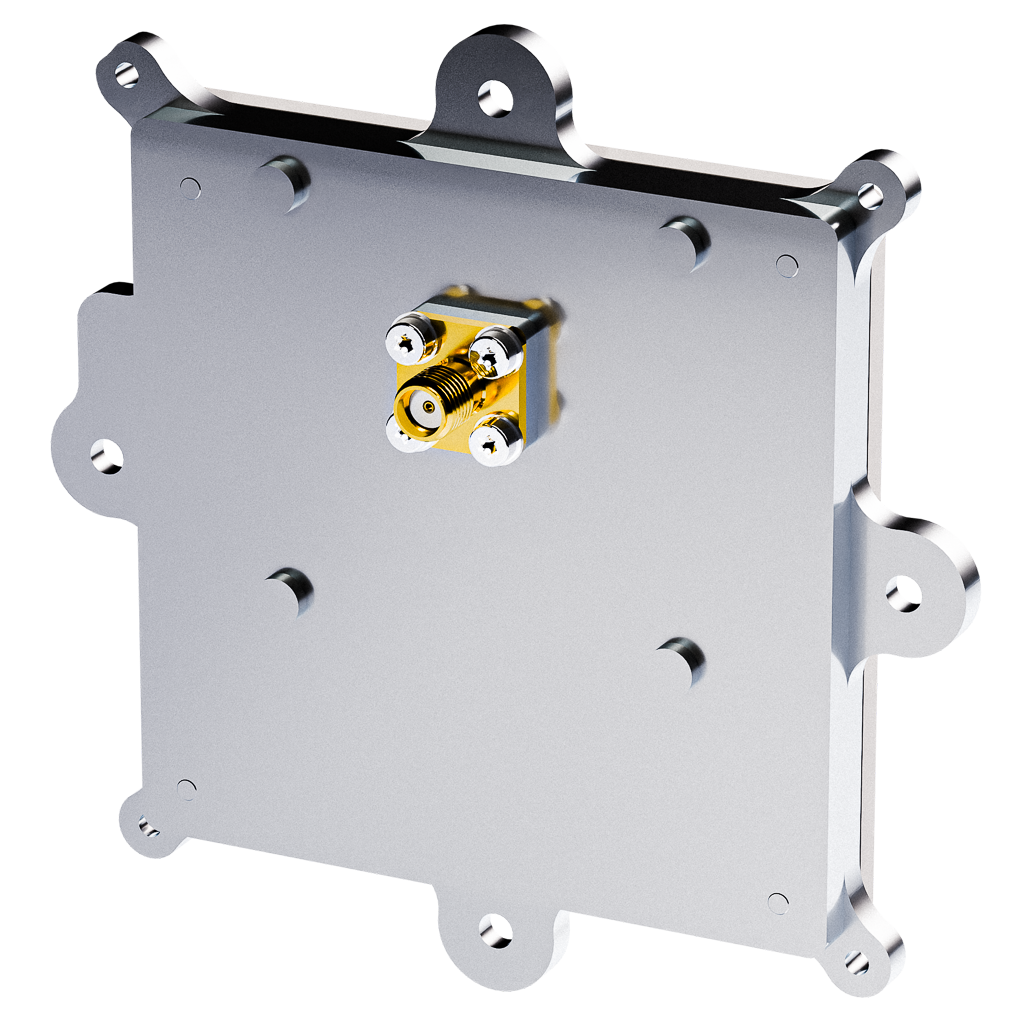
,SMA female connector), so a panel-level swap is mechanically feasible on a successor mission. However, the two antennas have different heights and masses, so integration on the same spacecraft would require mechanical verification. If multi-constellation or multi-frequency GNSS is a mission requirement from the outset, the GNSS All-Bands Antenna — or the GNSS All-Bands Antenna with LNA Integrated Card — is the recommended starting point. -
Is the GNSS L1/E1 Bands Antenna compatible with the Anywaves Test Hat for GNSS Antennas?
Yes. The GNSS L1/E1 Bands Antenna is compatible with the Anywaves Test Hat for GNSS All-Bands Antennas, allowing RF functional testing at L1/E1 frequency while the antenna is integrated on the spacecraft. This simplifies RF verification during final integration and at the launch site, without requiring demounting.
GNSS L1/E1 bands antenna: high-gain GPS L1 & Galileo E1 navigation for LEO satellites
The Anywaves GNSS L1/E1 Bands Antenna is a TRL 8 navigation antenna for LEO satellites, operating in the GPS L1 and Galileo E1 frequency band from 1 563 to 1 587 MHz. It delivers a realized gain exceeding 6.5 dBi at 1 575.42 MHz with a reflection coefficient better than −18 dB and a boresight axial ratio below 1 dB at the central frequency. Right Hand Circular Polarization. Phase center position variation is held within a sphere of radius less than 1 mm across the full band, with elevation-driven variation below 0.4 mm within ±60° — enabling precise orbit determination and timing applications.
Envelope: 96.6 × 96.6 mm, size <1U, mass 103 g, protruding height <8 mm. PEEK radome with SG121FD anti-ESD white paint on flight models, qualification temperature −120°C to +120°C. Group delay variation <0.8 ns. Coaxial SMA female connector (50Ω), 4 × M3.65 mechanical interface. Acceptance testing (RF, mechanical and thermal) included on all flight models. Compatible with the Anywaves Test Hat for GNSS All-Bands Antennas. ITAR Free.
